
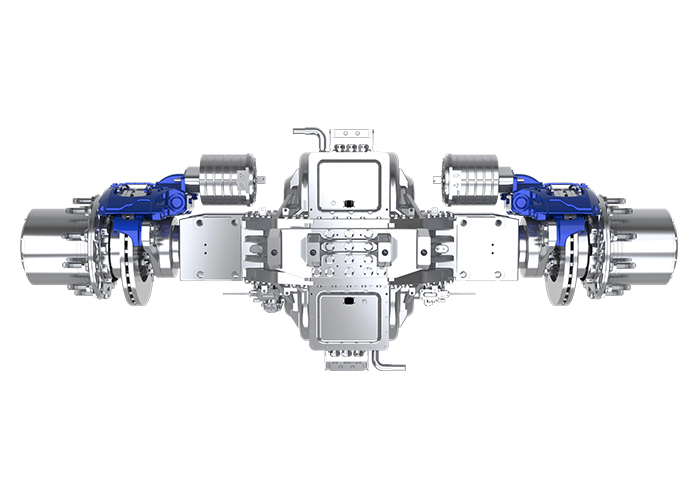
For the commercial vehicle makers and fleet companies, making the choice on the appropriate electric powertrain system is very important and involves vehicle design, operation conditions, maintenance scheduling, and overall reliability. In order for an eAxle to include the most important components of the drivetrain into the one package, there is still much more than just looking at the power of the electric motor that should be considered.
How does an eAxle work in an electric commercial vehicle?
An eAxle changes the traditional vehicle drivetrain layout by combining multiple drive components into an integrated axle system.
What components are included in an eAxle system?
The components included in an eAxle configuration consist of the electric motor, reduction gear box, and axle itself. The exact design will vary depending on the intended vehicle type and additional systems that must be interfaced.
In contrast to powertrain configurations using separate engine, transmission, and axle designs, the use of an integrated electric drive train can result in simplification of the mechanical configuration of the electric vehicle.
Components most frequently considered by consumers are:
| Component | Function |
| Electric motor | Converts electrical energy into mechanical power |
| Gear reduction system | Adjusts speed and torque output |
| Axle assembly | Transfers power to the wheels |
| Controller interface | Manages drive operation |
| Cooling system | Helps maintain operating temperature |
The exact configuration depends on vehicle type, operating environment, and performance requirements.
Why is integration important for commercial vehicle powertrain design?
Commercial vehicles are typically required to run under challenging situations that involve a lot of load carrying, numerous start-stop cycles, and extended periods of operation. The integration of the drive components with the eAxle is likely to have consequences on the packaging of the vehicle, installation space, and coordination of the system.
On the contrary, integration requires meticulous design consideration. Motor power, gearbox ratio, axle capability, and vehicle systems should match each other. A design intended for a city bus may not be applicable to a heavy-duty electric truck.
What advantages does an eAxle bring to commercial vehicle applications?
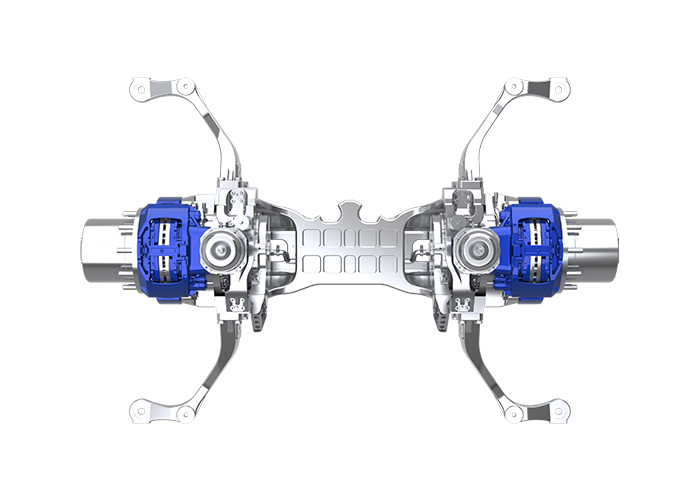
The application requirements of commercial vehicles are different from passenger vehicles, making drivetrain selection a key engineering decision.
Why are electric drive axles considered for buses and trucks?
Commercial vehicle manufacturers often evaluate electric drive axles because they can support different vehicle layouts and powertrain designs.
Applications may include:
- Low-floor bus platforms;
- Electric delivery vehicles;
- Heavy-duty electric trucks;
- Special commercial vehicles.
For low-floor buses, packaging space is especially important because chassis layout influences passenger capacity and vehicle design. An electric portal axle or other specialized axle configuration may be considered when manufacturers need different wheel and chassis arrangements.
How does an eAxle system affect vehicle design?
An eAxle can influence several design factors:
- Available chassis space;
- Weight distribution;
- Maintenance access;
- Drive system layout;
- Integration with vehicle controls.
Engineers usually evaluate the complete vehicle system rather than selecting the axle separately.
A suitable electric drive axle depends on factors such as vehicle size, operating route, payload requirements, and expected driving conditions.
How do different eAxle configurations compare for commercial vehicles?
Different vehicle platforms may require different electric drivetrain structures.
What is the difference between single-motor and dual-motor eAxle solutions?
A single-motor eAxle uses one electric motor to provide drive power, while a dual-motor eAxle configuration uses two motors within the drive system.
A comparison may include:
| Configuration | Typical Considerations |
| Single-motor eAxle | Simpler structure and suitable for specific vehicle requirements |
| Dual-motor eAxle | May provide different torque distribution options depending on application |
| Distributed electric drive axle | Places drive units closer to individual wheels |
The appropriate configuration depends on vehicle requirements rather than one design being suitable for every application.
When are distributed electric drive axle solutions considered?
Distributed electric drive axle systems may be considered for vehicles where manufacturers require different approaches to drivetrain layout.
A wheel-end motor or distributed drive structure can change how power is delivered to the wheels. However, engineers need to consider additional factors such as:
- Space limitations;
- Unsprung weight;
- Maintenance access;
- Control system coordination.
The final selection depends on the vehicle platform and operating environment.
How do regenerative braking and vehicle control systems work with an eAxle?
Modern electric commercial vehicles require coordination between mechanical and electronic systems.
How does regenerative braking connect with eAxle operation?
Regenerative braking allows the electric motor to work as part of the braking process by converting some kinetic energy into electrical energy.
In an eAxle system, regenerative braking requires coordination between:
- Motor control;
- Vehicle control unit;
- Brake system;
- Energy management strategy.
The actual effect depends on vehicle design, control calibration, and operating conditions.
Why is drive-by-wire chassis integration important?
Commercial electric vehicles increasingly rely on electronic control systems to coordinate driving functions.
An eAxle may need to communicate with vehicle systems related to:
- Torque control;
- Braking coordination;
- Vehicle operation monitoring.
For advanced commercial vehicle platforms, integration between the electric drivetrain and chassis control system is an important engineering consideration.
What should buyers check before selecting a commercial vehicle eAxle supplier?
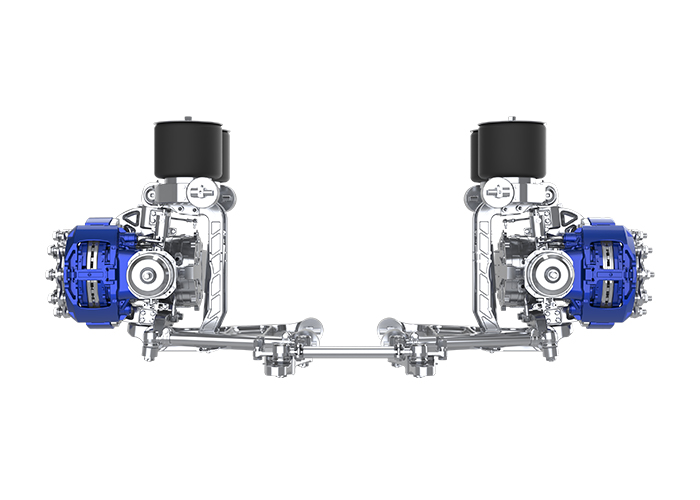
Selecting an eAxle supplier requires reviewing both product capability and engineering support.
Which technical specifications should engineers compare?
Before purchasing, buyers usually review:
- Rated power;
- Torque output;
- Vehicle compatibility;
- Axle load requirements;
- Thermal management;
- Installation dimensions;
- Control system compatibility.
A specification sheet alone may not show whether the system fits the complete vehicle. Technical communication between supplier and vehicle manufacturer is important during development.
What testing and support should buyers discuss?
Electric drivetrain projects often require coordination before mass production.
Buyers may discuss:
- Prototype support;
- System testing;
- Installation guidance;
- Maintenance requirements;
- Spare parts planning;
- Technical documentation.
A supplier’s ability to support engineering communication can influence project progress.
How can Hangzhou Contemporary e-Drive Technology Co.,Ltd. support eAxle development projects?
Hangzhou Contemporary e-Drive Technology Co.,Ltd. provides Advanced E-Axle Solutions for commercial vehicle electric drivetrain applications. The company supports customers with eAxle system development, electric drive axle solutions, and related engineering communication for commercial vehicle platforms. The services provided concentrate more on helping the automobile producers as well as the projects in selecting the product and system match and other technical discussions. As a buyer looking for an eAxle supplier, one should still compare the issues like drivetrain specification, vehicle suitability, documentations, delivery condition, and service among others.
Conclusion
An eAxle is an important part of modern commercial vehicle electrification because it combines electric drive components into an integrated powertrain solution. Selecting a commercial vehicle eAxle requires consideration of vehicle requirements, torque demand, chassis design, control integration, and maintenance planning. Different configurations, including dual-motor eAxle and distributed electric drive axle systems, may suit different vehicle applications. Buyers should evaluate both technical specifications and supplier support before starting a project. A suitable eAxle solution depends on the vehicle platform and intended operating conditions.
FAQs
1. How does an eAxle work in an electric vehicle?
An eAxle combines electric drive components such as the motor, gearbox, and axle into an integrated system that transfers electric power to the wheels.
2. What is a commercial vehicle eAxle used for?
A commercial vehicle eAxle is used in electric buses, trucks, and other commercial platforms that require electric drivetrain solutions.
3. What is the difference between an electric drive axle and a traditional axle?
An electric drive axle integrates electric drive components into the axle system, while a traditional axle usually works with a separate engine and transmission system.
4. When should manufacturers consider a dual-motor eAxle?
A dual-motor eAxle may be considered when vehicle requirements require a different torque distribution approach or specific drivetrain characteristics.
5. What should buyers check before selecting an eAxle supplier?
Buyers should review technical specifications, vehicle compatibility, testing support, documentation, delivery terms, and engineering communication before selecting a supplier.