
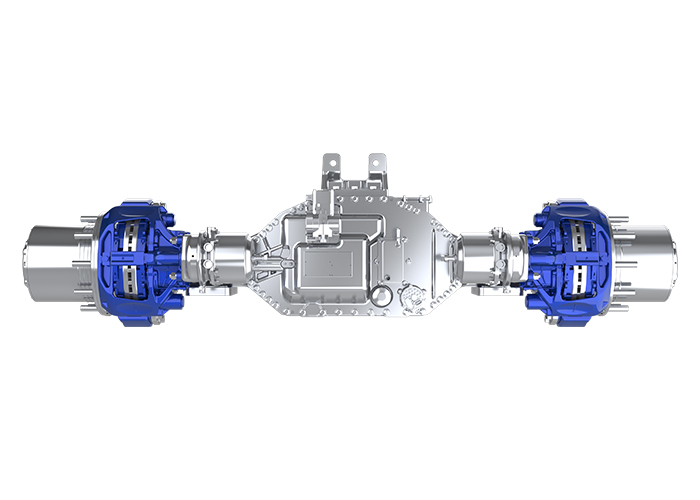
Energy efficient, few interruptions during charging and a fixed delivery time are the demands put on long-distance transport. A loaded trailer has a high mass and therefore a lot of inertia. It also has braking points, descents and rolling resistance as well as thermal loads. As a rule, however, a conventional trailer is not powered and thus only adds dead weight to the vehicle. The Regenerative Trailer Axles change this fundamentally: for the first time ever, a trailer can be powered and thus become a “power trailer” to recover the braking energy and to support the vehicle’s traction. But is the energy recovery effective? It is whether the system fits route profile, payload, vehicle control, battery strategy, maintenance capacity, and supplier documentation. Procurement departments are afraid of buying an expensive heavy system that works well on paper but is not integrable, cannot be maintained or is not justifiable for the planned driving on a specific lane.
How do Regenerative Trailer Axles help with the Long-Haul Range problem?
While range in trailer operation is partly a function of the battery size in the tractor unit, it is more so a function of how energy is lost and re-gained between vehicles in the operating set. Trailer electrification can be very effective in supporting the operation of the tractor unit, but only if the control logic for the trailer is well coordinated with the control for braking, stability and route for the tractor unit in the operating environment.
How does Energy Recovery work on a trailer axle?
A regenerative axle is composed of an electric machine, inverter, control unit and battery or energy storage system. When you are decelerating with a trailer, the electric motor of the axle is working as a generator. It converts part of the trailer’s kinetic energy into electrical energy. This energy can be used to drive, to supply other auxiliary equipment or the refrigeration unit.
Where can range gains realistically appear?
Benefits of an EV occur more often on routes with lots of hills, changing speed, traffic, loading/unloading at yards and frequent stopping and starting. At constant speed on a flat straight road, there is less opportunity for recovery from losses due to aerodynamic drag, rolling resistance, etc. so while these factors are still in play the benefits of an EV are not as pronounced and therefore are largely determined by the battery size required to provide the necessary range. It would be inappropriate for a buyer to accept a single range number figure when more appropriate would be a simulation of potential range for a specific route.
Which specifications should buyers compare before selecting an electric trailer axle?
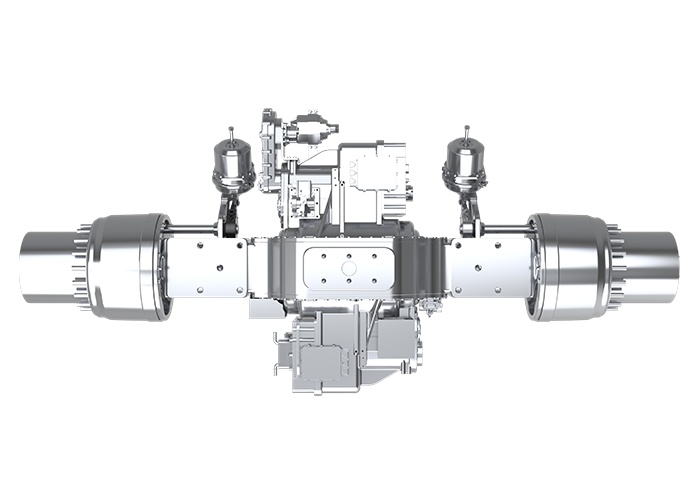
When selecting a power trailer, it’s not just about the accessories bolted to the trailer, it’s a complete vehicle system. When purchasing a power trailer, compare the mechanical, electrical, software, and service requirements of each trailer.
Which mechanical and electrical data should be checked?
This list includes axle load rating, motor torque, peak power, continuous power, gear ratio, cooling, inverter rating, battery capacity, voltage, connectors, mounting envelope. Braking integration, suspension fit, wheel-end service access, height, thermal, waterproofing, corrosion protection and diagnostic interface. Weight distribution, braking priority and axle weight limits set by law for production trailers before conversion for fleet use.
What route and fleet data should be shared?
Suppliers need route distance, elevation, average speed, stop frequency, payload, tractor type, charging access, climate, trailer type, tire choice, and duty cycle. The difference between a distribution center-based fleet with many stops along the way and a cross-border carrier using regeneration differently. Don’t wait to share data until the proposed electric trailer axle is sized for the wrong job.
What risks and trade-offs should fleet operators evaluate?
Adding regenerative trailer technology can add functionality to your trailer, however it adds mass, software, batteries, wiring, and service requirements. These add to your overall operating model, impacting your business case.
What operational risks can reduce performance?
Suboptimal calibration can create drag, poor braking, uneven energy recovery and discomfort to the driver. The added weight of the batteries can be a challenge for the payload planning. Weather conditions can negatively influence the way a battery is performing and how it is heating up. If no diagnostic tools, parts or service staff is available a smart trailer can turn into a down time factor.
What safety and compliance questions matter?
When purchasing a combination vehicle, it is advised to evaluate braking coordination, stability control, possible faults, isolation protection, high-voltage safety, transport of batteries and service procedures. Market and vehicle type determine the applicable regulations. When checking standards and test reports, scope is more important than the logo on it. Supplier’s declaration of conformity must be kept separate from third-party certification and vehicle specific approval or confirmation. When purchasing, one should also ask questions such as: who tests the combined behavior of tractor and trailer, who is owner of software updates and how does one report faults to drivers and service personnel during actual operation.
How should procurement teams build a practical business case?
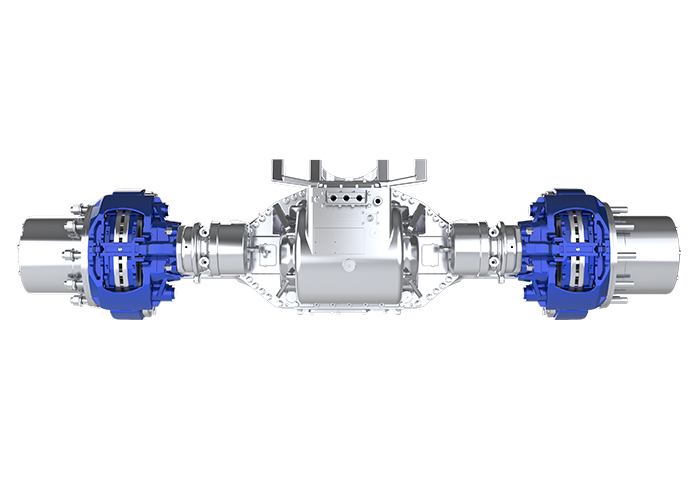
When it comes to building a good business case for increasing efficiency in tractors, energy saving is linked to extended range, reduced maintenance, increased payload, initial and running costs, residual value and much more. As regenerative axles are just one of many possible ways to increase efficiency in tractors, a business case has to be compared with other possibilities for increasing efficiency. In addition to energy saved by regenerating energy, also the energy delivered by regenerative axles as tractor assist is saved. A good business case should make a clear distinction between both as conversion losses, limits of the used battery, driving style and control strategy of the tractor all affect the amount of energy actually saved and delivered by regenerative axles compared to the energy actually saved and delivered by other measures to increase efficiency.
Which cost items are often missed?
Common missed costs include battery replacement assumptions, software updates, brake integration work, wiring harnesses, charging hardware, training, diagnostic tools, spare parts, warranty limits, downtime during installation, and trailer resale questions. Procurement teams should also account for data management, telematics subscription, and service response time.
How should performance be verified before rollout?
Start with a pilot route and define what success will look like before you begin the installation process. Measure the following: the amount of energy that is captured versus the amount of energy that is consumed by the system; the amount of tractor assist that is required; the braking feel of the system; the battery temperature; the effect of payload on the system; the amount of downtime the system has; the amount of labor required for maintenance; and most importantly the feedback from the driver compared to a similar non-powered trailer traveling the same route. This allows for rational fleet wide decisions and prevents misinterpreting results from a short demonstration.
How can Hangzhou Contemporary e-Drive Technology Co.,Ltd. support power trailer projects?
Hangzhou Contemporary e-Drive Technology Co.,Ltd. is specialized in developing Advanced E-Axle Solutions for various commercial vehicle platforms. As Regenerative Trailer Axles are of great interest to potential buyers, discussions can be held on the electric axle configuration, distributed drive architecture, required torque, energy recovery strategy, available space for integration, control communication, etc. Project requirements can also be discussed. The company’s main business focus is on e-axle, electric drive and brake-by-wire solutions for commercial vehicles. As such supplier can assist OEMs, trailer manufacturers as well as fleet operators to transform long range on the road into engineering specifications and validation samples. As always, it is important to compare technical data, documentation, pricing, delivery terms, test reports and service among suppliers before making a final decision.
Conclusion
Long-haul fleets can benefit from treating the trailer as an active energy asset instead of passive mass by optimizing energy recovery with Regenerative Trailer Axles. The value of such a system is created by matching Route Profile, Braking Opportunities, Battery Strategy, Vehicle Control and Maintenance Capability. An electric trailer axle is only credible when performance claims are backed up by Route Data and Pilot Testing. Performance of electric trailer axles should be compared to other measures such as aerodynamics, tires, charging strategy, driver training and tractor efficiency. Careful evaluation shows that Energy Recovery can support Long-Haul Range without creating new operational risk.
FAQs
1. Can Regenerative Trailer Axles solve range limits by themselves?
No, they can only support range and energy management and the results are dependent on many factors such as route, payload, braking, driving speed, battery size, tractor efficiency and control strategy.
2. Is a power trailer useful only for electric tractors?
Not necessarily. A powered trailer may support battery electric, fuel cell, or some hybrid use cases, but integration and legal requirements must be checked.
3. What should buyers ask before choosing an electric trailer axle?
Ask for torque, power, voltage, battery capacity, thermal limits, axle load rating, braking integration, diagnostics, service plan, test data and warranty conditions.
4. Which routes usually benefit most from Energy Recovery?
Routes with features such as grades, repeated stops, traffic, distribution yards, etc. can provide more recovery opportunities than flat highway driving. Downhill braking would also provide recovery opportunities.
5. What is the safest way to evaluate fleet adoption?
We will run this as a controlled pilot to measure the energy recovered and the resulting downtime, compare to a baseline trailer, assess maintenance impacts, and get feedback from drivers before broad scaling.