
When an electric semi-trailer solution gains its own drive, it stops being a passive load carrier. The tractor, trailer axle, battery, brakes and control software must work as one powertrain. For OEMs and fleets, the question becomes how the trailer contributes, recovers energy and remains controllable.
The trailer becomes a controlled powertrain element
A conventional trailer transfers load and braking forces through mechanical interfaces. A powered semi-trailer adds a distributed e-axle, traction battery, power electronics and a supervisory controller. It can assist the tractor on launch and climbs and apply regenerative braking on descents. The combination becomes a coordinated powertrain.
Every benefit depends on coordination. Torque must follow the tractor’s demand, axle loads must stay within the vehicle definition, and braking must remain stable if a sensor, data link or high-voltage component is unavailable. Evaluate it with defined interfaces, modes and fallback states.
Four operating changes fleets should model
Build the business case around route events, because a trailer behaves differently on a climb, cruise, descent and low-speed maneuver. Use this comparison as a test frame.
|
Operating event |
What propulsion changes |
Evidence to request |
|---|---|---|
|
Launch and climbing |
Trailer torque can share the peak demand, reducing the tractor’s workload when the combination is heavily loaded. |
Wheel-torque split, grade, payload and thermal limits. |
|
Long downhill sections |
Regenerative braking can turn part of the trailer’s kinetic and potential energy into stored electrical energy. |
Battery state of charge, descent length, recovered energy and brake temperatures. |
|
Repeated stop-and-go work |
The trailer can blend electric regeneration with friction braking to reduce heat input when the control strategy permits. |
Brake blending map, stability response and fade test conditions. |
|
Tractor matching |
A powered trailer may work with an electric or combustion tractor, but the interface and energy strategy are not identical. |
Communication protocol, power limits, fault handling and tractor approval scope. |
These are test hypotheses, not guaranteed savings. Compare the same payload, weather, traffic and tyre conditions, and record battery temperature, state of charge and unavailable periods.
What the hardware stack must include
The traction battery is sized around duty cycle, axle load and charging access. CDTL lists 106 kWh, 141 kWh, 282 kWh and 513 kWh options for its intelligent powered-trailer solution, subject to configuration. Nominal capacity alone does not establish range or route energy.
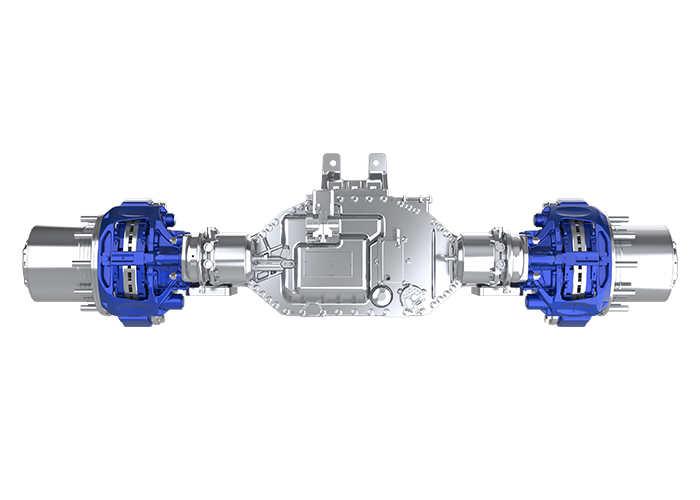
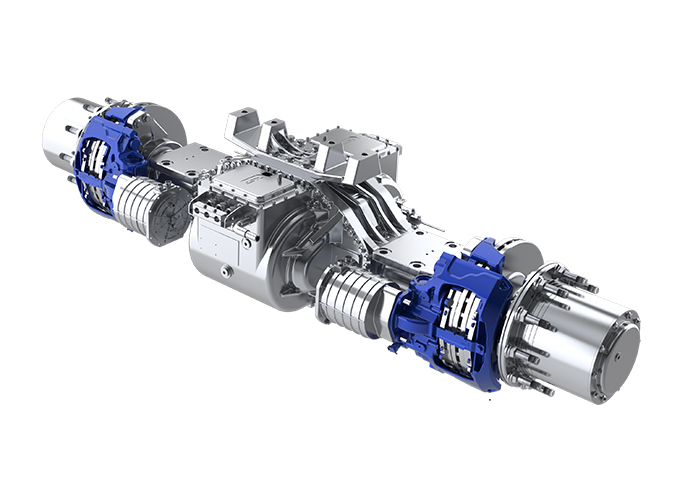
The powered trailer axle is a distributed electric drive trailer axle with peak power listed up to 2 × 120 kW. The RFQ should map the electric axle drive system, drive axle assembly and electric axle for truck duty to one approval plan.
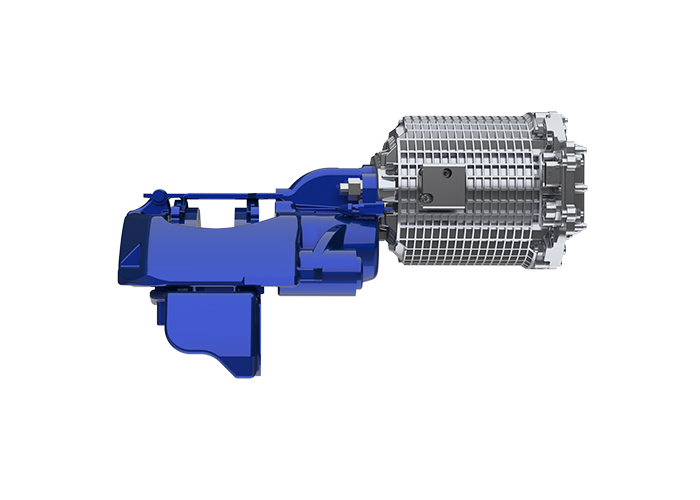
Braking is the other major change. Regeneration must blend with the mechanical brake without a response gap or unstable trailer. An optional electromechanical brake can shorten the actuation path. Buyers evaluating an electromechanical braking system for trucks should request trailer configuration, fallback behavior, diagnostics and test conditions.
|
System element |
Published configuration example |
Question for the RFQ |
|---|---|---|
|
Traction battery |
106 / 141 / 282 / 513 kWh options |
Which capacity, usable window, mass and charging method apply to the target route? |
|
Distributed e-axle |
Peak power up to 2 × 120 kW |
What are continuous power, torque, thermal derating and axle-load limits? |
|
Brake interface |
Optional EMB with regenerative braking coordination |
How are service brakes, parking brake and emergency braking validated together? |
How the tractor-trailer interface changes
A powered trailer needs a defined electrical and data handshake with the tractor: torque requests, authorization, available-power reporting and loss-of-communication behavior. Mechanical limits still matter, including kingpin and fifth-wheel ratings, axle positions, tyres, suspension travel and articulation.
The energy strategy differs by tractor. An electric tractor may share a high-voltage plan; a combustion tractor requires the trailer to manage its own battery and charging. An electric drive axle for heavy duty trucks supplier can translate torque into the vehicle interface, but the OEM and trailer builder must agree responsibilities.
Separate component supply from integration responsibility. State who owns the vehicle controller, calibration, cybersecurity, safety case, approval evidence, diagnostics and software updates. This prevents engineering gaps and unclear warranty boundaries.
Where powered semi-trailers need the strongest proof
Powered trailers are most compelling on routes with high combined mass, long grades or repeated acceleration. Mountain haulage, line-haul, reefer and container work create different value cases: reefer operations may prioritize uptime, while mountain routes prioritize grade assistance and thermal control.
A pilot should log payload, grade, speed, battery state, temperatures, energy flow and faults. Compare with a defined baseline over repeatable trips, and require a data dictionary and event log so results can be audited.
A practical OEM evaluation path
Define the combination and its limits: gross mass, axle loads, kingpin geometry, routes, charging windows, ambient temperatures and fallback behavior. Freeze the interface list before comparing suppliers; a lower price is meaningless if controls or validation are excluded.
Run three linked checks: simulation or bench confirmation of torque and braking, a controlled instrumented route, and a supervised fleet pilot covering charging, maintenance, updates and fault recovery. Tie acceptance criteria to conditions such as availability, energy, brake temperature and service time.
Review lifecycle readiness: spares, technician training, diagnostics, battery end-of-life handling and software revision control. Support must be as clear as the powertrain.
Why the supplier boundary matters more than the trailer label
A powered semi-trailer may be sold as an upgrade, but engineering spans the tractor, battery, axle, brakes, controls and operations. CDTL positions its powered trailer solution around distributed electric drive and EMB by-wire technology for curtain-side, van, reefer, lowboy, flatbed, container and tipper applications. Each needs verification.
For an OEM shortlist, an electric drive axle manufacturer for OEM should show which interfaces it supplies and which the vehicle team owns. The strongest response connects specifications to test evidence, labels assumptions and states what remains to be confirmed.
Summary: propulsion changes the buying decision
When the trailer adds propulsion, the purchase decision becomes a coordinated powertrain program. Assistance and energy recovery matter only when the battery, e-axle, brakes, software and service model are validated together. Compare suppliers on interface clarity and evidence, not peak power alone.
Not sure whether a powered trailer fits your routes? Send us your route profile (grades, payload, trip length, charging access) and our engineers will assess whether propulsion, recuperation, or both fit your operation.
[Talk to our engineering team →sales@cdtlev.com]
FAQ
Can a powered semi-trailer work with a diesel tractor?
Yes, if the system is designed for that combination and manages its own battery, controls and braking interfaces. Define communication, torque requests, fault handling, charging and approval scope, then demonstrate compatibility on the specific tractor and geometry.
Does trailer propulsion automatically reduce fuel or electricity use?
No. Results depend on payload, grade, speed, battery state, calibration and charging losses. Use a controlled baseline before claiming savings.
What battery size should an electric semi-trailer use?
There is no universal size. Follow route energy, grade assistance, charging access, axle loads, packaging and reserve. Larger capacity also affects mass and charging time; usable energy matters more than nominal capacity.
How is braking safety handled when the trailer regenerates?
The controller blends regenerative and mechanical braking while monitoring wheel slip, stability and health. Specify response time, degraded modes, emergency braking and brake-temperature validation on the complete combination.
What should an OEM request before approving a supplier?
Request the system boundary, interface document, battery and axle limits, brake-blending logic, fault matrix, cybersecurity, validation plan, service model and pilot criteria. Label each value as measured, calculated or a design target.