
Run one downhill check directly after charging; a mid-shift run cannot answer the same question. The change is often clearer to the driver than on an inspection sheet. After accelerator release at the usual marker, the truck passes its familiar slowdown point. Leave an axle fault among the possibilities, but wait for the data before assigning blame. Some of the returning energy may have nowhere to go because the battery is nearly full.
A mine should settle this question before route release. The truck has to control speed with the planned charge level, load, grade, and temperature. It also has to show what takes over when regeneration is reduced.
Why Can a Nearly Full Battery Accept Less Braking Energy?
Trace the reversed power path
On the grade, energy travels in the opposite direction from propulsion. Rotation enters through the wheels and the motors generate instead of drive. Their output passes through the inverter onto the DC bus, where the battery must receive it. Motor braking is trimmed whenever the pack declines part of that power.
The issue is voltage headroom. Cells near their upper limit cannot keep taking the same current without one of them exceeding its permitted voltage. The battery management system therefore sends a lower charge-power limit. The limit may begin before the SOC display reaches full, especially when cell balance is uneven. Pack temperature, chemistry, age, and calibration also move the limit.
This is why a percentage borrowed from another vehicle is poor evidence. The useful figure is the charge power permitted by this battery at this moment.
Do not confuse axle capacity with battery permission
There can be more negative torque available at the axle than the truck is allowed to request. The controller arrives at its command only after checking charge permission, motor speed, DC-bus voltage, inverter current, temperatures, wheel slip, and stability intervention.
Place requested torque, delivered torque, and the active limit source on a common trace. A normal battery restriction should not send technicians into the axle, while a communication or hardware fault should not be excused merely because SOC is high. CDTL’s page on distributed drive and brake control architecture describes the component architecture; limits elsewhere in the vehicle still remain part of the job.
What Will Change on the Ramp?
Notice where the truck stops slowing as expected
Reduced motor retardation first shows up as extra rolling distance after accelerator release. The driver’s next action may come sooner, or descent control may call on a second braking source. Once traction has used some stored energy, the pack can regain charge headroom and the earlier lift-off response may come back.
Cold cells can also restrict incoming power. Record battery temperature with SOC so that two different limits are not given the same diagnosis.
Check whether another brake filled the gap
Some complete vehicles blend service brakes or another retarding device when motor braking falls. Watch for steady vehicle deceleration accompanied by increasing air pressure; that combination reveals a change in the braking split. A driver may notice little on one descent.
That split matters over a working cycle. Energy not returned to the battery can appear as added heat in the friction brakes. Run the descent repeatedly and watch brake temperature rather than accepting one clean pass.
|
Finding in the log |
First question to answer |
Channels to compare |
|---|---|---|
|
High SOC followed by lower torque |
Which signal moved first: charge permission or torque? |
SOC, maximum cell voltage, charge-power limit |
|
Cold-start torque shortage |
Did cell temperature restrict incoming current? |
Minimum cell temperature, pack temperature, charge limit |
|
Repeatable change at one motor speed |
Which electrical or speed boundary is active? |
Motor speed, DC-bus voltage, inverter limit source |
|
Air pressure rises as regeneration falls |
Is brake blending holding total deceleration? |
Torque request, delivered torque, brake pressure |
|
Loose ground changes torque |
Did wheel slip trigger a reduction? |
Wheel speeds, slip flag, stability status |
Event order is the useful clue. Charge permission falling before motor torque supports a battery-acceptance diagnosis. If permission returns and torque stays low, continue through communications, sensors, inverter, motor, and brake control.
How Should the Downhill Test Be Run?
Use the route that exposes the limit
A mid-SOC demonstration on a short grade avoids the hard case. Begin with the highest departure charge the fleet intends to use. Test the approved loaded mass, the longest sustained grade, cold and hot conditions, loose sections, and the relevant speed range. Include an empty return run if it belongs to the duty cycle.
Record SOC, maximum cell voltage, permitted charge power, requested and delivered motor torque, motor speed, DC-bus voltage, vehicle speed, gradient, and payload on one time base. Add brake pressure and temperatures. Without synchronized data, the team can see the truck slow but cannot tell which system did the work.
Repeat until brake temperature tells the truth
Keep cycling until the service-brake temperature trend is clear. Release criteria should name the required speed control and stopping performance, temperature boundaries, warnings, transition behavior, and driver response. Write down each run’s starting SOC and temperature. Without that note, a later low-SOC pass may be mistaken for evidence from the charger-exit condition.
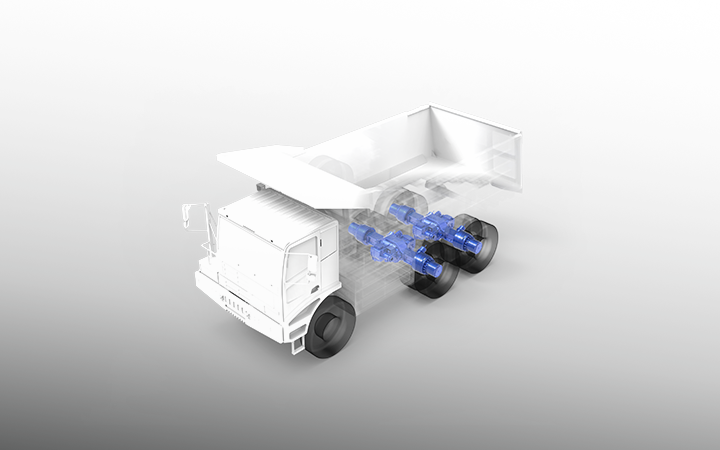
CDTL’s mining dump truck solution covers conversion as well as all-electric mine haulage. Site approval is narrower: it belongs to the stated gradient and truck mass, with the installed battery, tires, brakes, software, and expected weather.
Charging Strategy Has to Follow the Route
Keep room for the first descent when the project allows it
A truck that charges and immediately travels downhill may start the route with little room for recovered energy. The battery supplier and vehicle manufacturer may approve a lower departure target for that duty cycle. Do not select it by rule of thumb. Use the energy consumed before the grade, the potential energy on the descent, and the battery’s charge-power curve.
Review the alternative as well. With a high departure SOC, measure the extra work passed to the service brakes and the temperature margin left after repeated trips. Use that route record for charging, dispatch, and brake inspection rather than giving each team a different assumption.
Tell the driver when the braking split changes
Limited regeneration needs a clear indication and an approved downhill procedure. Driver training should cover the display, warning levels, speed-control action, and stop criteria. When a report comes back, maintenance can compare it with the logged limit source instead of changing parts on suspicion.
What Should Buyers Confirm for an EAB00T Mining Truck Integration?
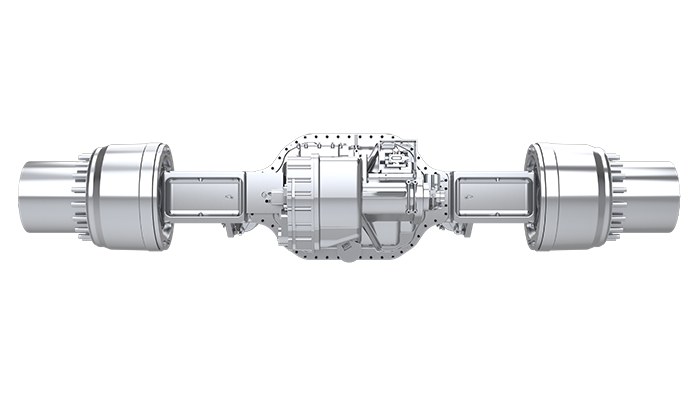
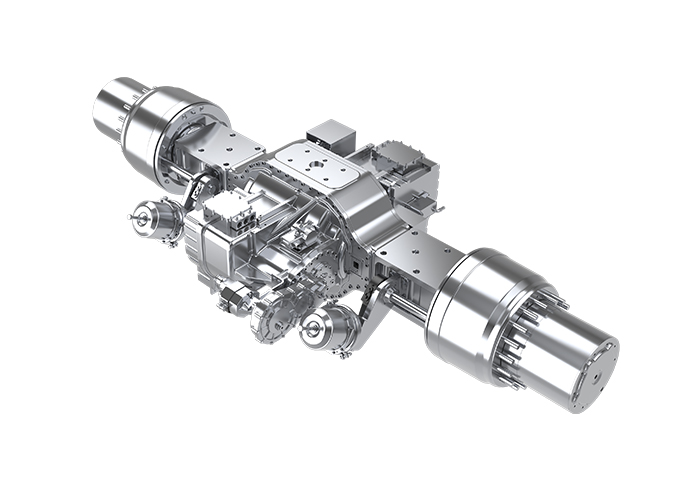
Hangzhou Contemporary e-Drive Technology Co.,Ltd. presents the EAB00T mining truck distributed e-axle for mining-truck conversion. Its product data show dual-motor output and 600 V rated voltage; the brake entry is air drum, and safety software is optional. The page also uses the phrase “100% torque regeneration.” Keep its meaning within torque; it is not a published guarantee of complete energy recovery or unchanged regeneration across the SOC range. Buyers need a vehicle regeneration map plus battery charge limits, brake coordination, repeated-descent temperatures, warnings, and route criteria. An inquiry through the technical contact page is more useful when it carries the grade, vehicle configuration, battery information, payload, and working cycle.
Conclusion
Near full charge, the battery can close down part of the electrical path that normally accepts downhill energy. Read its permitted charge power next to delivered motor torque and the contribution from the other brakes. Repeat the real descent from the fleet’s highest planned starting charge. The resulting trace distinguishes expected derating from a fault and supports a route-specific charging window.
FAQs
1. Does reduced regeneration prove that the e-axle has failed?
No. Begin with the battery’s permitted charge power and the controller’s recorded limit source. If the limit clears while torque remains low, continue the fault investigation.
2. Which SOC will start the reduction?
No percentage should be copied from another truck. Taper begins where this battery design, cell balance, temperature, age, calibration, motor speed, and control strategy cause it to begin.
3. Are the air brakes enough when regenerative torque is reduced?
On a vehicle designed for that blending, they can take part of the demand. Even so, repeat the descent and measure brake temperature while confirming the required performance. Available friction-brake heat capacity is finite.
4. Which channels should share the high-SOC test time base?
Synchronize SOC, permitted charge power, maximum cell voltage, battery temperature, torque request and delivery, motor speed, DC-bus voltage, road speed, grade, payload, brake pressure, wheel slip, and brake temperatures.