
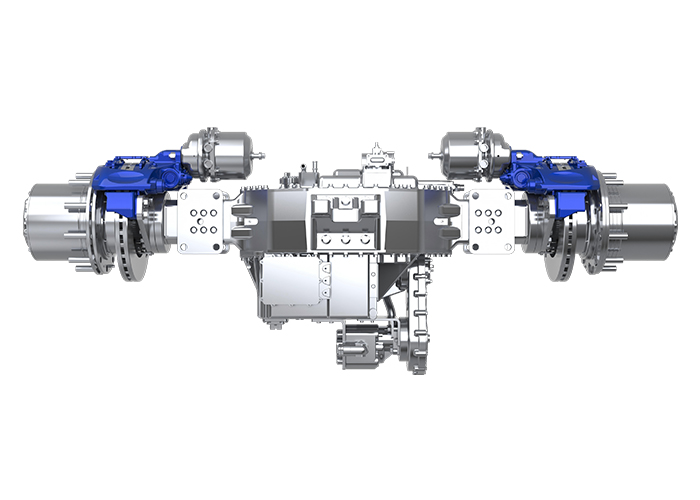
A commercial EV powertrain should be evaluated by how much energy it uses to complete the vehicle’s intended work, rather than by its peak horsepower alone. A truck that performs well during a short acceleration test may behave differently after several hours of loaded operation, particularly when road speed, motor temperature, and driving conditions change. For OEM engineers, the difficulty lies in comparing supplier efficiency figures that may come from different operating points or testing conditions. A useful evaluation connects drivetrain losses, vehicle duty cycles, continuous performance, and integration requirements before the powertrain configuration is approved.
Why Can Two Powertrains With Similar Horsepower Deliver Different Efficiency Results?
Imagine two suppliers presenting electric powertrains with comparable maximum output. Both systems satisfy the vehicle’s initial acceleration requirement, and their specification sheets appear equally suitable. Yet their efficiency characteristics may differ considerably when the motors operate at moderate speed or partial load.
Peak horsepower describes the maximum mechanical output available under specified conditions. Efficiency describes the relationship between useful output and energy input. A system can have considerable power capability without operating efficiently during the conditions encountered most frequently by the vehicle.
The distinction becomes particularly relevant for commercial vehicles because their operating patterns are often repetitive. A delivery truck may spend hours moving between customers, while a highway tractor can maintain a relatively narrow speed range for extended periods. Their most important operating points are not necessarily those associated with maximum output.
Compare Efficiency Across the Operating Range
A supplier’s peak-efficiency figure is useful, but an efficiency map provides a more complete picture of motor behavior at different torque and speed combinations.
For an OEM, the next question is whether the vehicle will regularly operate in the efficient regions shown on that map.
Consider a powertrain designed around strong low-speed torque. If its motor and reduction ratio are poorly matched to the vehicle’s normal cruising speed, the drivetrain may spend considerable time outside its most efficient operating region. A different configuration could produce similar peak power while requiring less electrical energy during the same journey.
The comparison should therefore connect motor operating characteristics with the actual vehicle requirements. The relevant electric drive system configurations can then be assessed against those requirements rather than compared using maximum output alone.
How Can OEMs Use Duty-Cycle Data to Evaluate Real Energy Consumption?
A supplier may provide an impressive efficiency result from a controlled test, but that figure becomes difficult to interpret without knowing how closely the test represents the intended vehicle.
During an RFQ review, this problem often appears when the same powertrain is being considered for several commercial applications. A distribution truck with frequent stops has different energy demands from a tractor operating primarily on highways, even when their rated power requirements overlap.
The evaluation needs to begin with a representative operating profile. Vehicle mass, payload variation, road speed, acceleration frequency, gradients, and operating duration determine where the drivetrain spends its time and how much energy it consumes.
Turn Vehicle Requirements Into Comparable Test Conditions
A useful way to organize the supplier discussion is to establish common operating conditions before requesting efficiency data.
- Vehicle operating condition
- Information to request from suppliers
- Loaded acceleration
- Motor and drivetrain efficiency at the required torque and speed
- Normal cruising
- Energy input and mechanical output at representative road speeds
- Sustained climbing
- Continuous output and thermal operating limits
- Low-speed operation
- Efficiency under the expected torque and speed conditions
- Extended duty cycle
- Energy consumption and performance after thermal stabilization
The table provides a framework for comparing proposals, but the final operating points must come from the vehicle program. A truck that spends most of its time at highway speed should not be evaluated using the same weighting as a municipal vehicle that repeatedly accelerates from rest.
For purchasing teams, the supplier’s efficiency figures become more useful when the test conditions and the proportion of time spent in each operating region are clearly documented.
The broader commercial truck application requirements also help illustrate why electric drivetrain selection needs to reflect the vehicle’s intended work rather than a generic commercial-vehicle specification.
What Should Buyers Examine When Comparing Powertrain Efficiency Test Results?
Two efficiency figures cannot be compared fairly unless they describe the same system boundary.
A motor tested independently may achieve a different efficiency result from a complete drivetrain that includes an inverter, reduction mechanism, bearings, and other mechanical components. Comparing those figures without identifying what was measured can lead to an incorrect supplier assessment.
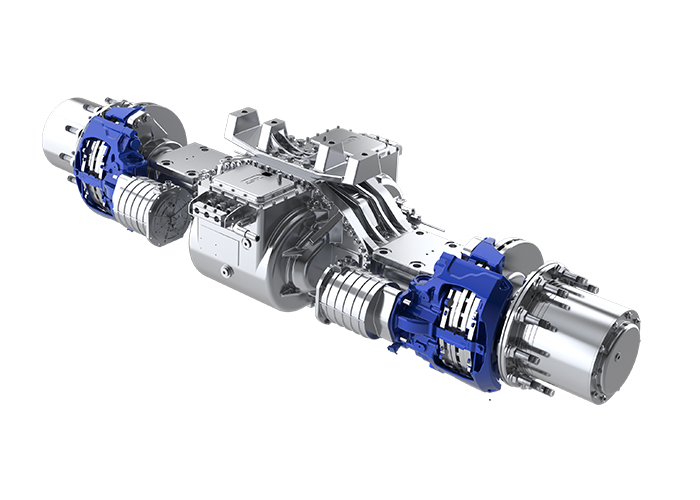
The problem is especially relevant when reviewing integrated electric drive systems, where several components are packaged within one assembly.
Establish a Common Measurement Boundary
Before comparing test reports, buyers should confirm whether the reported efficiency refers to the motor, motor and inverter, electric drive axle, or another defined assembly.
The test documentation should also identify the relevant speed and torque conditions, electrical input measurements, mechanical output measurements, and thermal state.
Where test methods differ, the engineering team may need additional data or a common validation procedure before drawing conclusions.
A supplier’s maximum efficiency figure should not be used as a substitute for a complete efficiency map. Neither should a short-duration result be treated as representative of sustained vehicle operation.
The purchasing decision becomes more defensible when both suppliers are evaluated against the same vehicle conditions and system boundary. Any remaining differences in testing methodology should be recorded rather than hidden inside a single comparison figure.
How Does Thermal Behavior Affect the Efficiency Observed During Vehicle Testing?
An electric powertrain generates heat through electrical and mechanical losses. As operating temperature changes, component characteristics and available output can also change, making thermal conditions relevant to the efficiency measured during extended operation.
This creates a particular challenge for commercial EV programs. A drivetrain may meet its efficiency target during an initial test but operate under different thermal conditions after a long climb, repeated acceleration, or several hours of continuous use.
For this reason, a test result should be accompanied by enough thermal information to understand the conditions under which it was obtained.
Review Performance After the System Reaches Its Operating Temperature
Engineers should distinguish between short-duration performance and the behavior of a powertrain operating under sustained load.
For a truck expected to climb long gradients, the supplier should explain how continuous output and operating temperature are evaluated. If thermal protection reduces available power, that behavior needs to be considered during vehicle matching rather than discovered after prototype testing.
Cooling requirements also belong in the discussion. The energy needed to operate auxiliary equipment, including the cooling system, can affect complete-vehicle energy consumption even when the drivetrain itself operates efficiently.
The technical integration of electric drive systems provides a relevant starting point for discussions about how drivetrain hardware and vehicle control requirements fit together.
For the OEM, the important distinction is between a component efficiency measurement and the energy performance of the completed vehicle. Both are useful, but they answer different engineering questions.
Which Efficiency Evidence Should OEMs Request Before Approving a Supplier?
A powertrain that looks suitable during component selection still needs to demonstrate that its performance can be reproduced in the intended vehicle configuration.
By the time a project reaches supplier nomination, the discussion should have moved beyond rated power and peak efficiency. Engineering teams need to establish which operating conditions have been tested, whether the proposed hardware matches the tested configuration, and what additional work remains before production approval.
Connect Test Evidence With the Production Configuration
An effective technical review should identify the drivetrain configuration used during testing, including relevant motor, inverter, reduction-system, and control specifications.
Changes to the reduction ratio, cooling arrangement, tire size, or vehicle operating profile may alter the conditions under which the drivetrain operates. When such changes occur, the original efficiency evidence should be reviewed to determine whether further testing is required.
Manufacturing consistency is another consideration. The manufacturing and production capabilities of a potential supplier can be reviewed alongside its technical proposal to establish how approved configurations and production changes are managed.
Before signing off, the OEM and supplier should agree on the required test data, acceptance criteria, outstanding validation work, and responsibilities for changes introduced during vehicle development.
Need Help Matching Powertrain Efficiency to Commercial Vehicle Requirements?
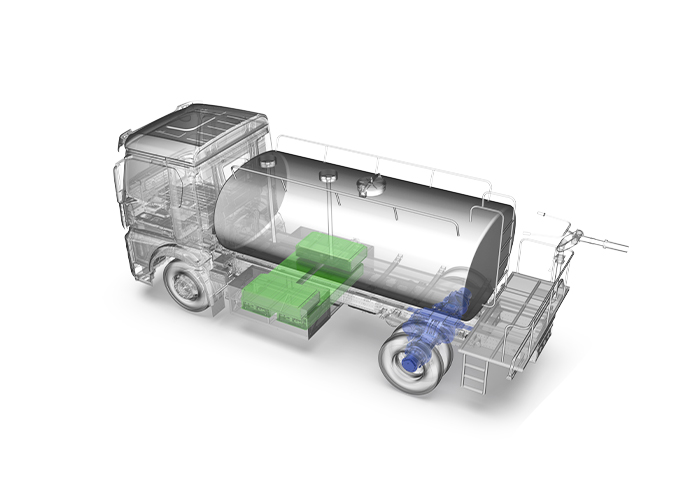
When efficiency targets have been translated into real vehicle operating conditions, the next stage is discussing how the proposed drivetrain configuration will meet them. Hangzhou Contemporary e-Drive Technology Co.,Ltd. develops distributed electric drive systems for new energy commercial vehicles, with applications covering different truck configurations and operating requirements. Its portfolio includes the EA5000N dual-motor distributed e-axle and EA3800N single-motor distributed e-axle . These configurations provide different starting points for discussions involving axle load, motor arrangement, vehicle installation, and drivetrain matching. OEM teams can use their vehicle data, operating profiles, and efficiency requirements to establish the technical information and validation conditions needed for a project-specific assessment.
Conclusion
Peak horsepower establishes part of a commercial EV’s performance capability, but it cannot explain how efficiently the vehicle will operate throughout its working life. A useful purchasing assessment combines representative duty-cycle data, comparable efficiency measurements, thermal operating conditions, and the requirements of the complete drivetrain. Before approving a powertrain supplier, OEM teams should establish common test boundaries, confirm the proposed production configuration, and identify any remaining validation work. These steps provide a clearer basis for comparing efficiency claims and reducing uncertainty during vehicle development.
FAQs
1. Can a supplier’s peak-efficiency figure predict a commercial EV’s energy consumption?
Not by itself. Peak efficiency represents performance at a particular operating point, whereas vehicle energy consumption depends on the torque, speed, and operating conditions encountered throughout the duty cycle. A representative efficiency map and vehicle-level energy assessment provide more useful information.
2. Which efficiency data should an OEM request during an RFQ?
Request efficiency data across relevant torque and speed conditions, together with the test boundary, operating temperature, continuous output capability, and drivetrain configuration. The supplier should identify whether the reported figures describe individual components or the complete assembly being proposed.
3. Can two suppliers’ efficiency figures be compared directly?
Only when the system boundaries and test conditions are sufficiently comparable. A motor-only efficiency figure cannot be treated as equivalent to complete drivetrain efficiency. Differences in measured components, operating points, temperatures, and test methods need to be resolved before comparison.
4. Why might a powertrain consume more energy during extended operation?
Operating temperature, drivetrain losses, cooling demand, and changing vehicle conditions can influence energy consumption during longer duty cycles. Testing should establish how the system behaves after reaching its normal operating temperature rather than relying exclusively on short-duration measurements.
5. What should OEMs confirm before approving a powertrain supplier?
Confirm that the proposed hardware matches the tested configuration, the efficiency evidence represents the intended vehicle duty cycle, and the supplier can support outstanding validation work. Responsibilities for engineering changes and production configuration control should also be agreed before approval.