
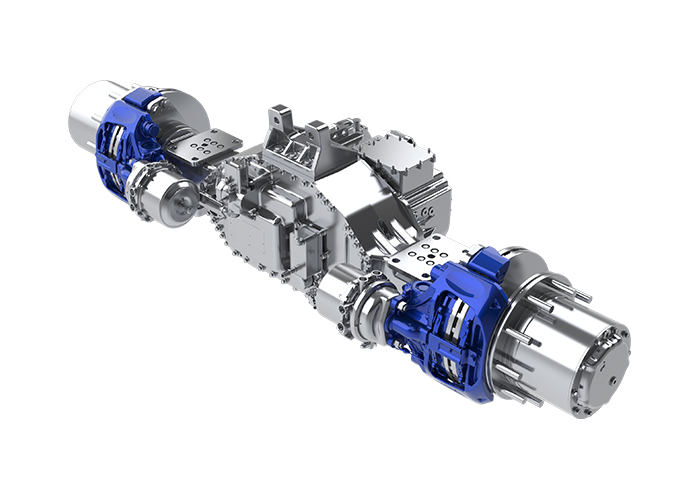
An e-axle supplier can meet the headline specification and still create problems once vehicle integration begins. Torque, power, axle load, and package size are easy to compare; ownership of controls, cooling, communication, validation, and engineering changes is harder to see. For commercial EV OEMs, system integration capability becomes visible in the gaps between components: mechanical boundaries, electrical communication, cooling, software responsibilities, validation, and engineering change control. A useful supplier review therefore asks not only whether the axle meets its specification, but whether the supplier can support the vehicle around it from concept through production.
What Does Interface Ownership Reveal About an E-Axle Supplier’s Integration Capability?
Many integration delays begin at a boundary that nobody clearly owns. The e-axle connects to the chassis, suspension, brakes, high-voltage system, low-voltage network, cooling circuit, and vehicle controls. If two engineering teams make different assumptions about the same interface, the conflict often appears during prototype assembly rather than during quotation.
A supplier should be able to state which drawings it owns, which vehicle inputs are required, which dimensions or interfaces are fixed, and which can be adapted. That does not mean the supplier must own every vehicle function. It means each boundary needs an owner, an approval path, and a defined set of inputs.
Ask for an Interface Matrix Before Design Freeze
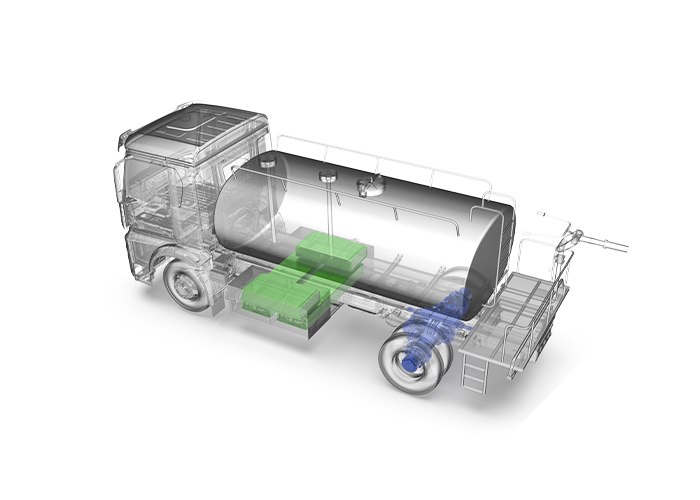
A useful matrix can cover mounting points, suspension and brake interfaces, electrical connections, cooling ports, communication signals, and service access. For truck programs, those items should be reviewed against the actual vehicle package rather than a generic axle model. Relevant commercial truck application layouts can provide useful context during that discussion.
A mature supplier usually makes these boundaries easier to see early. That reduces the amount of redesign caused by assumptions that were never formally agreed.
How Should OEMs Evaluate Controls Integration Before the First Vehicle Build?
Controls integration is difficult to judge from a product datasheet. Problems become visible only when the axle controller begins exchanging commands and feedback with the vehicle. Before the first prototype build, engineers should understand what the e-axle expects from the vehicle and what information it returns.
The discussion should cover torque requests, speed information, operating states, diagnostics, fault handling, communication timing, and any calibration responsibility shared between supplier and OEM. CAN support alone is not enough; the team needs to know how signals are used and how faults are handled.
Look for Defined Signals, States, and Failure Responses
A useful controls review goes beyond confirming physical communication. The engineering team should ask for signal definitions, diagnostic behavior, state transitions, and the response to missing or invalid information. If control responsibility changes with different vehicle architectures, that should be identified before software integration starts.
This is also where supplier engineering depth becomes easier to distinguish. A component-focused supplier may stop at the connector and message list. A system integrator should be able to discuss what those signals mean for vehicle behavior and what needs another check after calibration changes.
A supplier’s R&D and validation capability can help show whether controls work is supported by HIL, drivetrain testing, and broader validation activities. CDTL’s published R&D information includes HIL, drivetrain performance, environmental, vibration, NVH, and EMC testing within its validation framework.
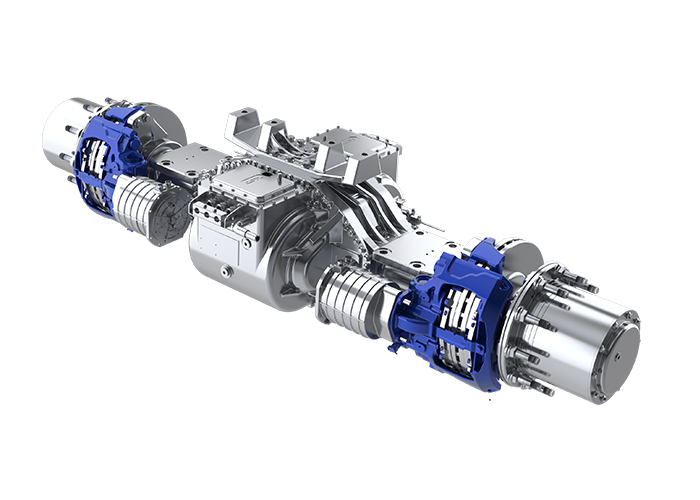
What Does Thermal Coordination Tell Buyers About Engineering Depth?
Cooling is often treated as a package detail until the vehicle works under sustained load. The e-axle may meet its power target, yet the vehicle still needs a thermal arrangement that supports the motor and related electronics under the intended duty cycle. If the OEM and supplier work from different coolant assumptions, a vehicle can reach prototype stage before the mismatch becomes obvious.
The useful questions are practical: what coolant conditions were used during validation, where temperatures are monitored, what continuous operating limits apply, and what happens when ambient temperature or sustained load changes? These questions reveal much more than a simple statement that a product is liquid-cooled.
Compare Test Conditions With the Intended Duty Cycle
Thermal coordination becomes meaningful when component limits are connected to vehicle use. If cooling hardware, coolant flow, payload, route profile, or installation space changes during development, earlier conclusions may need review.
A system integrator should be able to explain when that review is necessary instead of treating thermal management as an OEM-only issue. For purchasing teams, this is useful evidence that the supplier understands the relationship between component limits and complete-vehicle operating conditions.
Which Vehicle-Level Validation Evidence Should OEMs Request?
Bench validation is necessary, but it does not answer every integration question. Once the axle is installed, the vehicle introduces packaging movement, control interaction, thermal conditions, braking behavior, communication faults, and repeated load cycles. Buyers should therefore understand what has already been validated and what still belongs to the target vehicle program.
| Evidence to Request | What It Helps Confirm |
|---|---|
| Component validation scope | Which basic risks have already been tested |
| Vehicle or system test conditions | Whether results resemble the target application |
| Controls validation | How commands, feedback, and faults are checked |
| Configuration record | Whether tested hardware matches the proposal |
| Open validation items | What remains before production approval |
The important point is traceability. A result from another axle rating, software revision, or cooling arrangement may still be useful, but it should not be treated as identical evidence. The OEM needs to know which conclusions transfer and which require another check.
Production capability also matters here because the configuration that passed validation has to be reproduced in series production. Reviewing the supplier’s manufacturing capability helps connect engineering approval with production control. CDTL states that its manufacturing system includes automated processes and end-of-line intelligent testing.
How Should Change Control and Engineering Support Be Assessed Before SOP?
Vehicle programs change. Tire size is revised, suspension geometry moves, a controller version changes, the cooling circuit is updated, or vehicle mass grows. Any of these can affect assumptions used when the e-axle was selected.
Before SOP, the OEM should know which changes require formal engineering review, who decides whether revalidation is necessary, and how hardware, software, and drawing revisions are identified. This is where vague promises of “engineering support” need to become specific.
Treat Engineering Support as Part of the Supplier Scope
Buyers can ask who joins integration reviews, what information is needed to investigate a vehicle issue, how revisions are recorded, and how the supplier responds when a production change affects an approved interface.
This is the point where system integration capability becomes a procurement issue rather than an engineering preference. Clear interface ownership, validation responsibility, and revision control reduce ambiguity during development and make late project changes easier to assess before they become production problems.
Need Support Coordinating E-Axle Integration for a Commercial Vehicle Project?
Once interface ownership, controls, thermal conditions, and validation scope are defined, supplier discussions can move from general capability claims to the actual vehicle program. Hangzhou Contemporary e-Drive Technology Co.,Ltd. publishes complete electric-drive and vehicle-integration capabilities for zero-emission commercial vehicles, covering R&D, manufacturing, and development support. Its portfolio includes the EA5000N dual-motor distributed e-axle and the EA3800N single-motor distributed e-axle for different heavy-truck requirements. Their published specifications provide concrete inputs for vehicle matching, while the company’s broader system-level approach includes complete-vehicle design and integration support.
Conclusion
An e-axle supplier’s integration capability is best judged at the boundaries between systems, not by headline specifications alone. OEM teams should clarify ownership of mechanical, electrical, controls, and thermal interfaces, understand what validation evidence actually applies to the proposed configuration, and agree on change-control rules before SOP. When responsibilities, test conditions, and revision paths are visible early, the vehicle team has a stronger basis for moving from component selection into production development without carrying unresolved assumptions forward.
FAQs
1. What should an OEM request first when reviewing system integration capability?
Start with the system boundary and interface list. The OEM should know which mechanical, electrical, cooling, communication, and control interfaces belong to the supplier, which belong to the vehicle team, and where joint approval is required.
2. Is CAN communication support enough to prove controls integration capability?
No. Buyers should also review signal definitions, operating states, diagnostics, fault responses, timing requirements, and calibration responsibilities. Communication compatibility is only one part of proving that an e-axle can work correctly inside the vehicle control architecture.
3. How can an OEM tell whether supplier validation applies to its vehicle?
Compare the tested hardware, software, axle configuration, loads, thermal conditions, and operating profile with the proposed vehicle. Where they differ, ask which results remain applicable and which items need additional vehicle-level validation.
4. Which vehicle changes should trigger another integration review?
Changes in axle load, tire size, suspension, cooling conditions, control software, voltage architecture, braking interfaces, or installation geometry can affect earlier assumptions. The OEM and supplier should agree in advance which changes require review or revalidation.
5. Why does change control matter after an e-axle has passed validation?
Validation applies to a defined configuration. If hardware, software, interfaces, or vehicle conditions change without review, the original evidence may no longer represent the production vehicle. Change control keeps the released configuration aligned with its validation history.