
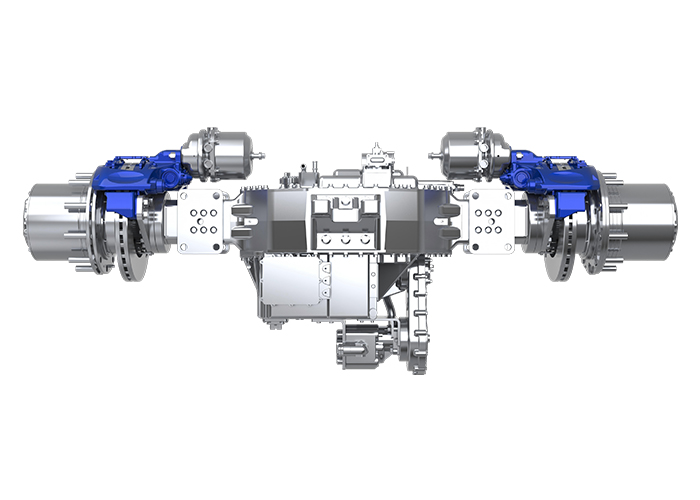
Heavy-duty trucks operate under demanding conditions where every design choice affects performance, payload, and efficiency. As the trucking industry moves toward electrification, engineers face a complex challenge—balancing vehicle weight while maintaining traction and energy economy. The e‑axle, which integrates the electric motor, gearbox, and power electronics into a single compact assembly, has become central to this balance. Its placement determines how mass is distributed across axles, directly influencing handling stability, braking efficiency, and long-term durability. This article explores how e‑axle positioning shapes the dynamics of heavy-duty electric trucks and why it’s critical for achieving reliable performance and cost-effective operation.
How Does E-Axle Placement Affect Weight Distribution in Heavy-Duty Trucks?
It is a misunderstanding to judge e-axles by their energy efficiency or cost before you even understand how they can change a truck’s chassis balance.
The Physics Behind Axle Load Balance
For heavy-duty vehicles, even distribution of the axle load to the tires is crucial in order to prevent excessive wear of the tires as well as for the stability of the braking system. For this purpose, the e‑axle should be positioned as close to the driving wheels as possible, in order to reduce the risk of rear-end sag under high loads, which is a particular problem with long distance distribution vehicles. Equitable loading of all axles prevents an overloading of individual wheel sets and parts of the vehicle chassis. This will extend the useful life of said parts and reduce the number of necessary maintenance interventions.
Influence on Vehicle Dynamics and Handling
Weight distribution also affects how a truck moves on rough terrain and during sudden maneuvers. By designing a good balance between axle positions, the layout enhances the truck’s steerability by ensuring constant tire contact with the ground. Reducing the rear bias of the axle load enhances safety during cornering and during evasive maneuvers in order to reduce the risk of a rollover. This is particularly important for vehicles with high centers of gravity, such as dumpers and articulated haulers. A near 50/50 axle load distribution or slightly rear-biased, is generally suitable for most trailer types and loads.
Why Is Optimal E-Axle Position Critical for Energy Efficiency?
The relationship between e-axle position and energy is a direct one. The positioning affects weight balance which in turn affects rolling resistance, torque requirements and energy recapture through regenerative braking.
Impact on Power Consumption and Range
A well-designed e-axle is stowed to minimize drivetrain losses by aligning the torque to the center of gravity for the vehicle. According to SAE International research, well-designed e-axle designs can improve range of electric trucks by 8-12% due to reduced rolling resistance and improved traction efficiency. Improved range translates into better battery consumption per mile, a critical factor for fleets, as range anxiety is still a concern and there are tight delivery schedules to meet. In addition, even load stowage prevents over-unbalancing of the electric motor, reducing thermal stress and enabling extended life for all components.
Effects on Regenerative Braking Performance
A regenerative braking system captures energy during deceleration. However, the amount of energy that is recovered depends greatly on the traction distributed to the axles. An evenly distributed mass of vehicles allows for the best deceleration without excessive wheel slip. This is especially important during downhill hauling where a construction or mining operation may be traveling. Balanced axle loads also improve braking predictability on surfaces such as wet asphalt or gravel.
What Are the Practical Considerations for E-Axle Integration?
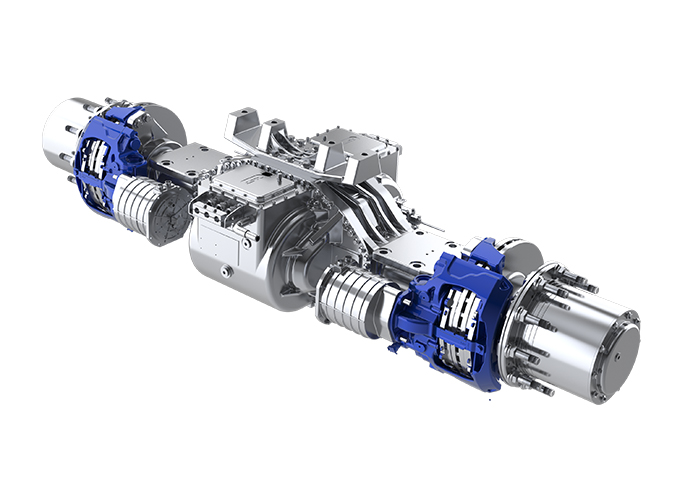
Applying theoretical benefits within real world design constraints.
Design Constraints in Heavy-Duty Platforms
The packaging of truck frames can vary significantly. The framework of a tipper for example is designed to provide high ground clearance to facilitate loading and unloading. In contrast a highway tractor will be designed to be as aerodynamic as possible and to be as compact as possible in order to optimize space on the chassis. This in turn puts a number of constraints on where the e-axle can be packaged without compromising cargo space and ensuring that the chassis is stiff enough. Additionally the e-axle must be designed with consideration of the required suspension travel in order to maintain an acceptable ride as well as provision for cooling of the high power electronics that are typically packaged within the drive unit.
Installation and Maintenance Factors
From an operational perspective the e-axle can be easily retrofitted into diesel powered vehicle fleets and with minimal down time. Mounting the e-axle in a central location can aid in the servicing of key points. However if the e-axle is not properly isolated it can increase cab vibration levels. Thus, the vibration damping mounts and flexible couplings are incorporated into the mounting brackets of the e-axle to provide the best protection for the driver and to protect the drivetrain.
How Does E-Axle Placement Influence Cost Efficiency and ROI?
In addition to assessing the technical performance of e-axles, a crucial factor for fleet managers in choosing the right configuration for their fleet, is the financial performance. For example, the total cost per mile and the return on investment (ROI).
Balancing Upfront Investment with Long-Term Gains
Optimized e-axle placement can contribute to lower operating costs over the vehicle’s lifetime by improving drivetrain efficiency, optimizing weight distribution, and reducing wear on key components. While the actual savings depend on vehicle design, load conditions, and driving cycles, these improvements can help fleet operators reduce total cost of ownership (TCO).
Durability and Lifecycle Economics
Even load distribution reduces stress on bearings and other suspension components, extending time between overhauls. And, most importantly, reliability – the ability to repair as required rather than be driven by unscheduled repairs – is critical to any commercial fleet operation where every hour off road is costing it money.
What Real-world Applications Demonstrate Effective E-Axle Placement?
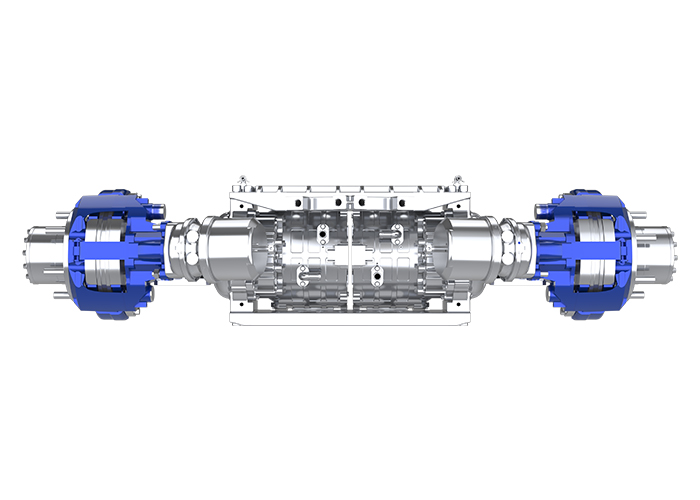
Some examples of how thoughtful integration can yield results in global markets.
Examples from Long-Haul Electric Fleets
Examples of freight carriers operating throughout Europe have adopted dual e-axles positioned on both drive axles to allow constant torque even with varying amounts of payload. Field data gathered from testing programs located throughout North America identified an improvement in traction stability for pull-type configurations operating with mid-mounted drive units on steep inclines by spreading torque equally between the front and rear section of the tractor unit in articulated applications.
Lessons from Construction and Mining Vehicles
For off-road applications, such as for example quarry transport or mining haulage, the rear-biased e‑drive design compensates for the front-heavy cabin including the hydraulic equipment. By adapting the corresponding suspension to the respective application, the component fatigue can be even increased by more than 15% and thus the reliability within the corresponding vibration cycles is improved significantly.
How Does Hangzhou Contemporary e‑Drive Technology Co., Ltd. Support Advanced E‑Axle Development?
As manufacturers continue to fine-tune their strategy for electrifying their heavy-duty models, they need to collaborate with specialized drivetrain manufacturers. One such company is Hangzhou Contemporary e‑Drive Technology Co., Ltd. This company specializes in designing high-torque integrated electric drives and is able to supply complete, modular drive systems that can be used on a variety of different chassis types. They are also able to assist with the prototype testing phase and provide OEMs with lifecycle consulting to guarantee ideal weight distribution while at the same time maintaining the durability and service-friendliness of the drive system. Contemporary e‑Drive works with manufacturers throughout the development phase to support a fast introduction to the market while maintaining high levels of reliability, essential for use in commercial fleets all over the world.
Conclusion
Where to put an e-axle on an electric heavy-duty truck is key to how the vehicle will operate on a day-to-day basis, whether it’s maintaining traction during acceleration or regenerating during braking. A balanced layout of such a critical component extends its service life while lowering the total cost of ownership. It does this by enabling greater energy efficiency as well as defined maintenance intervals, thereby also boosting safety margins. As freight transport with electrified vehicles is increasingly finding its way into concrete applications, cooperation between truck manufacturers and specialized drivetrain developers will remain crucial in ensuring robust performance in various hauling situations.
FAQs
1. What is an e‑axle for heavy-duty trucks?
An e-axle is a unit consisting of an electric motor, a gearbox, and power electronics, which is installed on the drive axle. It is significantly more compact than a conventional drivetrain and does not require propeller shafts.
2. How does axle placement affect truck performance?
Placement determines how weight is distributed across axles; this influences traction response, tire wear patterns, braking stability, and overall handling precision under varying loads.
3. Can you retro fit an existing diesel truck with an e-axle system?
Yes, there are modular retrofit kits available to fit electric drives to certain chassis types. However, prior to fitting a structural analysis will be required to confirm that the converted vehicle will comply with load bearing regulations.
4. Is optimized weight distribution better for range?
The industry benchmarking for weight distribution across axles shows how better distribution can improve range by reducing both rolling resistance and increasing the amount of regenerative braking recovered while the vehicle is decelerating.
5. What are the key factors when designing an e-axle layout?
The engineers have to take into account the frame geometry, the thermal management of the power electronics as well as the cooling system, the suspension alignment and the allowed deviations, the service access points and the possible dimensions in relation to the placed battery pack within the vehicle architecture.