
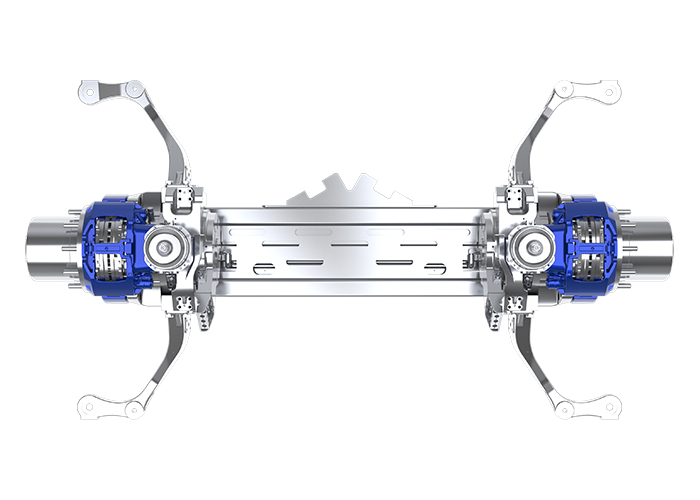
Urban transit vehicles are looking to carry more passengers without compromising on the ease of boarding or circulation or causing problems for wheelchairs. These factors place demands on the drive train because a traditional axle design can intrude on the space needed for passengers. A portal axle design allows designers to shift the wheel centers upward and free up room at floor level, but it also has implications for the suspension system, and packaging of the motor and other components, and even the maintainability of the vehicle. For manufacturers and operators, it’s a matter of far more than just the driveshaft.
How does a low-floor portal axle create more usable cabin space?
A portal axle has gearing at the ends that allows the main axle housing to be raised up and located mostly above the wheel center. This configuration allows lowering of the body on a low floor vehicle by creating more space between the wheels and decreasing the height of any structure that would otherwise have been required to intrude on the passenger cabin.
Why does axle offset matter for the passenger floor?
Using a conventional straight axle, the differential housing and axle beam often dictate the minimum floor height typical of the rear of the vehicle. By using a portal gear arrangement, the final drive is moved out of the center of the vehicle. This allows the designer to create a flatter aisle, reduce steps, or extend the low-floor region further back.
The benefit is not just a lower number on a schematic. It also influences the layout of the boarding area, seating arrangements, and whether wheelchairs or other vehicles can negotiate the transitions. The final design of the aisle and step heights will be dictated by the suspension system, tire diameter, bodywork, and the location of batteries or powertrain.
How can the architecture improve passenger capacity?
Removing or reducing drivetrain intrusions creates more freedom for seat orientation and standing space. Designers may recover areas that would otherwise be occupied by raised platforms, steps, or large housings. This can improve the ratio between vehicle footprint and usable passenger area.
Capacity should be evaluated together with axle load, emergency egress, seating regulations, and weight distribution. Adding more usable floor space does not automatically mean every square foot should be filled with passengers. Structural limits and operating requirements still control the final layout.
Why are portal axles important for accessibility in urban buses?
Accessibility is shaped by the full boarding path, from the curb and entrance ramp to the interior circulation area. A low-floor portal axle supports that path by reducing floor-height changes in sections that are traditionally difficult to package.
How does a flatter aisle help passengers with limited mobility?
Steps and steep internal ramps can cause problems for wheelchairs, older people, and those with strollers or bags, causing delays and creating barriers. Creating a flat interior offers more design freedom for body engineers to create connected systems such as from doors to seats or from seats to Wheelchair positions.
The benefit of this is particularly significant on routes with a high service frequency because of the potential delay impacts on the overall timetable. However, just the axle is not enough to achieve accessibility. The opening geometry, the kneeling suspension, the ramps, handrails, and internal clearances must all be considered as systems.
What accessibility trade-offs still require engineering review?
Wheel-end gearing, brakes, links, and frames all take up room around the wheelhouses. A low-floor vehicle would then have raised seats near the sides, creating a center aisle. However, designers should make sure to account for aisle width, seating capacity, shape of the wheelhouse, accessibility, and bodywork strength.
Meanwhile, noise and vibration are significant concerns since portal gears are located near the passenger compartment. The gear ratio, bearings, housing stiffness, lubrication, and mounts all contribute to overall levels. As a result, it is crucial to ask the vendor how they plan to address the dynamics in the context of actual urban driving cycles.
Which technical specifications should bus manufacturers evaluate?
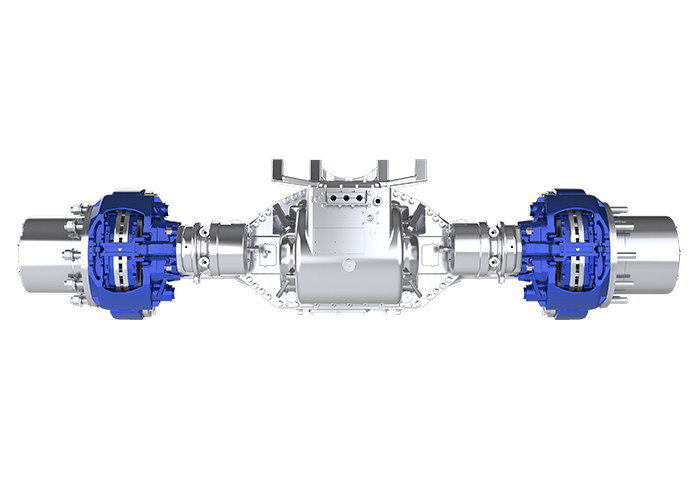
A low-floor portal axle must match the vehicle’s weight class, powertrain, wheel size, braking system, and expected route conditions. Procurement should begin with a vehicle-level requirement rather than a generic request for an electric axle.
Which load and gearing parameters are critical?
Key items include rated axle load, peak and continuous torque, reduction ratio, wheel-end gear design, track width, ground clearance, and allowable wheel or tire combinations. The reduction ratio must suit the motor speed range and target vehicle performance. An unsuitable match can reduce efficiency, create excess heat, or limit grade capability.
Engineers should also review duty-cycle assumptions. Frequent stops, curb impacts, tight turns, and fully loaded operation can place different stresses on gears and bearings than steady highway travel. The supplier’s technical proposal should state the conditions used for sizing.
How should braking and suspension integration be checked?
Portal axle packaging affects brake location, steering or suspension links, air springs, dampers, and anti-roll systems. Drawings should be reviewed in the full range of wheel travel, not only at nominal ride height.The clearance should be free during jounce, rebound, steering movements where necessary, and body kneeling.
The brake system should be chosen considering the vehicle’s mass, regenerative ability, thermal characteristics, parking needs, and access to service. Wrong decisions made at this stage are expensive to correct since they involve changes to the chassis frame, wheelhouse, or body floor.
What failure risks should operators and engineers control?
Portal axles add wheel end gearing and drivetrain components, introducing additional lubrication, sealing, alignment, and thermal management aspects.The architecture can be made reliable through appropriate design and maintenance, but it requires a more disciplined approach than some alternatives.
Which components deserve the closest attention?
Wheel-end gears, bearings, seals, housings, and lubrication circuits are critical. Contamination, incorrect oil level, seal damage, or excessive temperature can accelerate wear. Housing deformation or alignment errors may also disturb gear contact and bearing load.
Routine inspection should include leakage, unusual noise, temperature changes, fastener condition, brake wear, and lubricant condition according to the supplier’s maintenance instructions. Trends are often more useful than isolated readings. A gradual change in noise or temperature may indicate developing wear before a major failure occurs.
How can manufacturing and installation quality affect service life?
Gear accuracy, bearing fits, housing machining, heat treatment, and assembly cleanliness influence operating consistency. On the vehicle side, mounting alignment, suspension geometry, torque procedures, and wiring or coolant routing around an integrated e-axle must also be controlled.
Buyers should request dimensional documentation, assembly requirements, inspection records, and change-control procedures. Incoming checks should confirm model identity, interfaces, visible condition, and supplied documentation. For a new vehicle platform, prototype testing should include load, braking, thermal, vibration, and route-representative operation.
How should buyers evaluate a low-floor portal axle supplier?
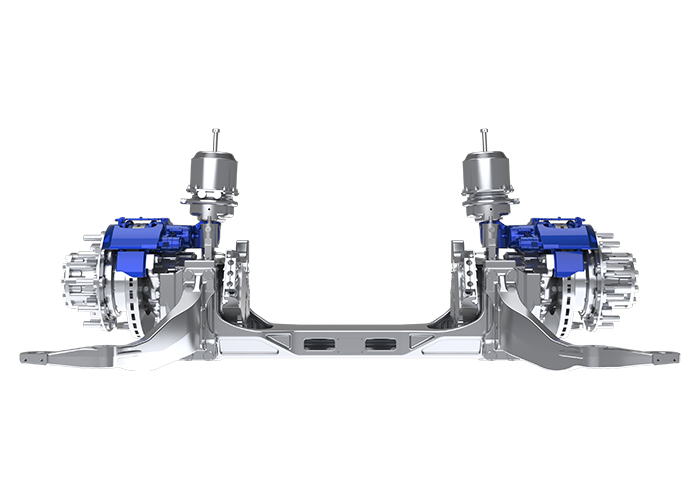
Supplier evaluation should cover engineering cooperation as well as hardware capability. A portal axle is closely tied to body layout and chassis geometry, so late communication can lead to packaging conflicts that are difficult to correct.
What should be reviewed before prototype approval?
The supplier should provide interface drawings, load assumptions, gear ratios, motor or drivetrain compatibility, braking options, suspension connection data, lubrication requirements, and service clearances. Buyers should compare these documents with the actual vehicle CAD model and operating profile.
Prototype approval should not rely on fit alone. Engineers need to review noise, thermal behavior, efficiency, braking integration, ground clearance, ride behavior, and maintenance access. Any deviation between prototype and production configuration should be documented and re-evaluated where necessary.
Which support services matter after vehicle launch?
Fleet operators require parts identification, maintenance, lubrication, troubleshooting, and replacement. Vehicle manufacturers can also require communication in case of materials, bearings, seals, software, or gear modifications.
Warranties should clarify the terms, exclusions, responsibilities in diagnosis, and required documentation. A seemingly low purchase price is not a good deal if the axle is hard to maintain or if the parts are not available in time to meet the fleet’s maintenance schedule.
How can a specialized e-axle supplier support low-floor bus projects?
Hangzhou Contemporary e-Drive Technology Co.,Ltd. provides advanced e-axle solutions for electric and low-floor transit vehicles. Its support can involve axle configuration, drivetrain matching, packaging review, and coordination around load, gearing, braking, suspension, and installation interfaces. Besides, buyers and sellers can discuss prototype-related issues, technical documents, production planning, and post-sale support. In this case, vehicle manufacturers need to provide information on vehicle mass, axle load, floor height targets, motor data, duty cycles, and interface schematics at an early stage. This allows for technical specifications to be considered before sample approval and reduces the risk that packaging modifications will be necessary at a later stage. However, prior to series production, it is recommended that buyers obtain information on validation activities, maintenance, commercial aspects, and change control.
Conclusion
A low-floor portal axle can be beneficial to urban bus design by providing more interior space and allowing for more flexible passenger arrangements. However, the benefits are related to the vehicle level system and not the axle toplogy itself. The axle’s load carrying capability, gear ratios, brake configurations, suspension characteristics, thermal performance, noise, maintainability and supplier support are all critical factors that must be taken into account. Careful prototype validation and documented production control help reduce the risks associated with adopting a specialized drivetrain architecture.
FAQs
1. What is the main purpose of a low-floor portal axle?
Its main purpose is to offset the axle structure from the wheel centerline, creating more space for a lower passenger floor while maintaining suitable ground clearance and drivetrain function.
2. Does a low-floor portal axle always increase bus capacity?
Not automatically. It creates more layout flexibility, but final capacity still depends on axle load, seating rules, wheelchair space, body structure, emergency access, and weight distribution.
3. Can portal axles be integrated with electric bus drivetrains?
Yes, depending on the axle and vehicle architecture. Engineers must match motor speed, reduction ratio, torque, cooling, braking, suspension, controls, and available packaging space.
4. What maintenance does a portal axle require?
Maintenance typically includes checking lubrication, seals, bearings, wheel-end gearing, fasteners, brakes, noise, and operating temperature according to the supplier’s service instructions and the vehicle duty cycle.
5. What should buyers provide when requesting a low-floor portal axle proposal?
Provide vehicle mass, axle load, wheel size, track width, floor target, motor data, duty cycle, braking requirements, suspension layout, ground-clearance needs, and expected production volume.