
A new electric truck project may look promising at the pre-production trials, but it often faces serious challenges before entering seriouseproduction. The motor may provide the required power, the battery pack may deliver the needed range, and the prototype may pass the initial driving tests. Nevertheless, not all details are revealed under ideal conditions – when the truck is operating with a full load, heavy traffic, extreme temperatures, and more. In most cases, there is one weak link in such vehicles – an electric drive that has to perform at its best under the most strenuous conditions. Therefore, for OEMs launching heavy-duty electric trucks, innovation in electric drives emerges as a critical technology enabler.
Why Do Electric Heavy-Duty Vehicle Projects Need More Than a Powerful Motor?
A popular misconception about electric vehicle development is that boosting motor power will automatically lead to performance improvements. The connection between power and performance is much more nuanced than the popular press would have us believe.
Powerplants in industrial vehicles are designed to operate under sustained loads rather than peak power outputs. A delivery truck is likely to spend more time on the highway than on a drag strip, and a construction vehicle is likely to see regular use at low speeds with maximum torque. The drivetrain is a critical enabler of this performance, and its design can impact the vehicle well beyond power delivery alone.
The electric drive system is more than just a power transfer unit from the motor to the wheels. It is a critical component that determines the vehicle’s torque characteristics, energy consumption, brake integration, and overall chassis performance.
A mismatch between the drive system and the vehicle application can create problems such as:
- Additional calibration work during vehicle testing;
- Reduced performance under continuous loads;
- Unexpected changes to chassis design;
- Higher development costs before production.
This is why OEM engineers increasingly evaluate the complete electric drive architecture instead of focusing on individual specifications.
How Does Electric Drive Architecture Affect Vehicle Development?
Traditional vehicle platforms were focused on internal combustion engines and mechanical transmissions. Electric drive technologies open up new opportunities, but they also present design challenges.
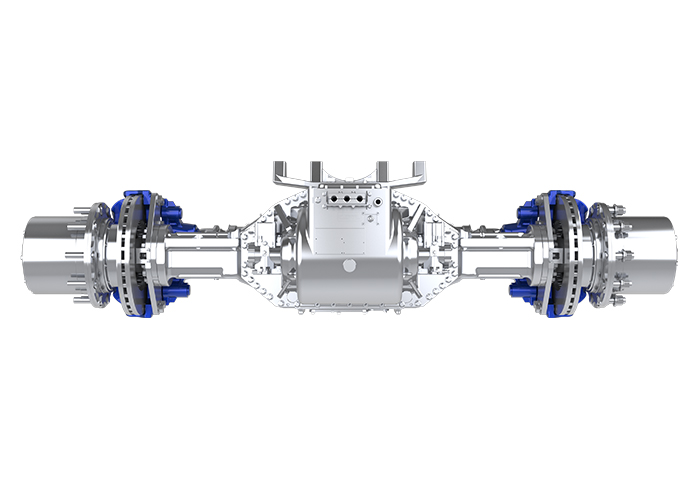
An advanced electric drive axle was created, which integrated into a single unit such components as an electric motor, a reducer, an axle housing, and an electronic control unit. This allowed to optimize the power transfer from the motor to the wheels.
However, integration also creates new engineering questions.
Before selecting an electric drive system, OEM teams need to understand:
- Whether the axle structure matches the chassis platform;
- Whether the installation space is sufficient;
- Whether the system weight affects vehicle balance;
- Whether maintenance requirements fit future fleet operation.
A technically advanced drivetrain may still create project delays if these factors are considered too late.
What Technical Factors Determine the Real Performance of Advanced Electric Drives?
The performance of an electric drive system is not defined only by peak torque or rated power. In commercial vehicle applications, continuous operation and system coordination often matter more.
A drivetrain that performs well during a short test may behave differently after thousands of kilometers under real working conditions.
Several technical factors influence the final result.
How Does Torque Control Influence Heavy-Duty Vehicle Operation?
Electric motors provide rapid response, but the vehicle still depends on how that torque is managed.
A fully loaded truck starting on a slope requires different torque behavior compared with a vehicle maintaining speed on a flat road. The control system must understand these changes and adjust power delivery accordingly.
Advanced electric drives use electronic control strategies to manage torque distribution more accurately.
For distributed drive systems, independent control of different drive units creates additional flexibility. Instead of relying only on mechanical power distribution, the system can respond to wheel conditions and vehicle behavior.
This approach is especially useful in situations involving:
- Uneven road surfaces;
- Reduced traction conditions;
- Frequent acceleration and braking;
- Different payload levels.
Technologies such as electronic differential control, EASR (Electronic Acceleration Slip Regulation), IESS (Intelligent Electronic Stability System), and DABS (Dynamic Anti-lock Braking System) support closer coordination between drivetrain performance and vehicle control.
Why Does Thermal Validation Matter for Commercial Vehicle Applications?
Thermal performance is often underestimated during early electric vehicle development.
Passenger vehicles and heavy-duty vehicles create different operating demands. A commercial truck may operate for extended periods with high loads, causing continuous heat generation from the motor, inverter, and transmission components.
A suitable electric drive design needs to consider:
- Cooling system structure;
- Heat transfer efficiency;
- Temperature protection strategy;
- Performance after repeated high-load operation.
Without proper thermal validation, a drivetrain may meet laboratory requirements but require additional adjustments after vehicle deployment.
How Can OEMs Reduce Integration Risks During Electric Truck Development?
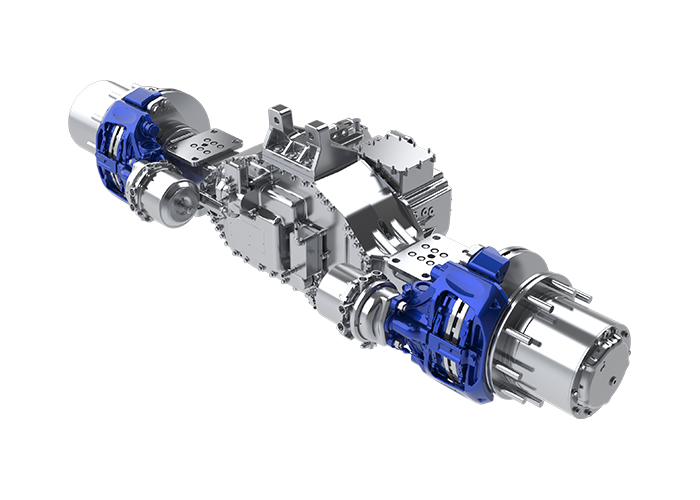
Electric vehicle development involves multiple systems working together. The electric drive axle should not be considered independently from the entire battery system, vehicle control unit, brakes, and chassis arrangement.
Various malfunctions arise not due to the failure of one or another node but a result of the interaction of several elements.
Why Is Vehicle-Level Calibration Important During Development?
An electric drive supplier delivers more than mechanical hardware.
During vehicle development, engineers need to coordinate:
- Torque response;
- Regenerative braking behavior;
- Stability control;
- Communication between vehicle systems.
A drivetrain that performs correctly on a test bench may still require adjustment when installed in a complete vehicle.
This is why suppliers with vehicle integration experience can help OEM teams identify problems earlier.
The calibration process is not only about making the vehicle operate. It also determines how the vehicle feels during acceleration, braking, and different driving conditions.
What Problems Can Appear Without Proper Vehicle Integration?
A common development challenge is discovering compatibility issues after the prototype stage.
For example:
- The axle mounting structure may require redesign;
- Control parameters may not match vehicle requirements;
- Thermal performance may change after installation;
- Production processes may need modification.
Identifying these issues late can increase engineering workload and delay project schedules.
Early cooperation between OEMs and electric drive suppliers reduces these risks.
How Should OEMs Evaluate an Advanced Electric Drive Supplier?
Selecting an electric drive supplier is not simply a component purchasing decision. The supplier’s engineering capability can influence the entire vehicle development process.
For commercial vehicle manufacturers, long-term cooperation requires more than product delivery.
What Should OEMs Review Before Starting Cooperation?
Before selecting a supplier, OEM teams should review whether the company can support the complete development process.
Important areas include:
- Product customization ability;
- Vehicle integration experience;
- Testing methods;
- Manufacturing control;
- Technical communication efficiency.
Different commercial vehicle platforms have different requirements. A supplier that understands application differences can provide more practical engineering support.
Why Does Production Capability Matter After Prototype Development?
A successful prototype does not automatically guarantee successful mass production.
Electric drive systems combine mechanical precision, electrical components, and software functions. Changes in production processes or component quality can affect vehicle consistency.
OEM buyers should evaluate:
- Production management systems;
- Quality inspection procedures;
- Product traceability;
- Long-term supply capability.
For commercial vehicles, reliability after delivery is just as important as performance during development.
How Will Advanced Electric Drives Influence the Future of Heavy-Duty Electrification?
The next stage of commercial vehicle electrification will be focused on improving the integration of drive rails and control systems.
As battery technologies evolve, drivetrain performance, control, and adaptability will become more and more important.
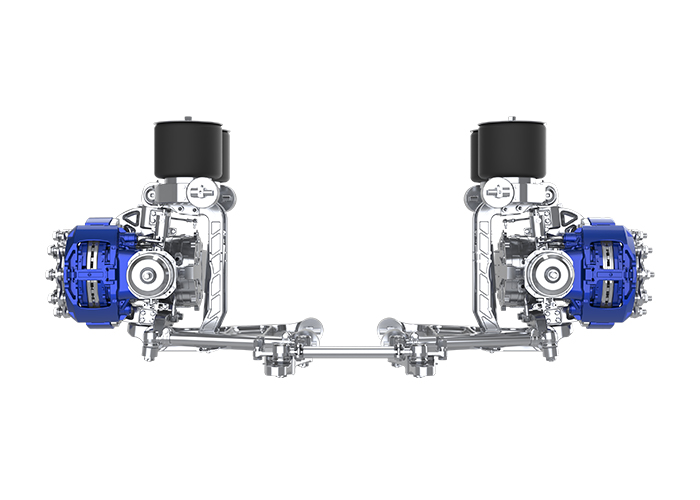
Advanced electric drives will not simply replace traditional axles. They will become part of a larger vehicle architecture involving energy management, braking systems, and intelligent control.
For OEMs, the future challenge is not only creating an electric vehicle that works. It is creating one that performs reliably across different operating environments and remains competitive throughout its service life.
Why Choose Hangzhou Contemporary e-Drive Technology Co.,Ltd. for Advanced E-Axle Solutions?
Hangzhou Contemporary e-Drive Technology Co., Ltd. focuses on advanced e-axle solutions for new energy commercial vehicles, including distributed drive systems, EMB braking technology, and intelligent chassis solutions. The company supports OEM customers through electric drivetrain development, system integration, and technical services. By combining electric drive technology with commercial vehicle application requirements, it helps partners develop solutions for different vehicle platforms and electrification scenarios.
Conclusion
Advanced electric drives are at the heart of modern electrification in heavy-duty vehicles, as they determine the energy flows and management strategies. However, for an OEM, the choice of the drivetrain type is by no means simple, as there are several factors to consider. Apart from the apparent voltage, power, and torque ratings, the match to the vehicle, thermal performance, integratability, and the support from suppliers are also important. Thus, as commercial vehicles enter the era of electromobility, the drive system is set to become a key enabler of improvements in both vehicle performance and development.
FAQ
1. Why can two electric trucks with similar batteries have different performance?
The difference often comes from drivetrain architecture, torque control, thermal management, and how well the electric drive system is integrated with the complete vehicle.
2. What should OEMs consider before selecting an electric axle?
OEMs should evaluate vehicle weight, operating conditions, installation requirements, control compatibility, thermal performance, and supplier engineering support.
3. Is maximum torque the most important factor when choosing an electric drive?
Not always. The suitable torque level depends on vehicle application, duty cycle, load requirements, and how effectively the drivetrain uses available power.
4. Why is vehicle integration important for electric drive projects?
Because the electric drive system needs to work together with the battery, controller, braking system, and chassis. Poor integration can create additional development work.
5. What makes a reliable electric drive supplier?
A reliable supplier should have engineering experience, customization capability, manufacturing consistency, testing ability, and the capacity to support long-term commercial vehicle projects.