
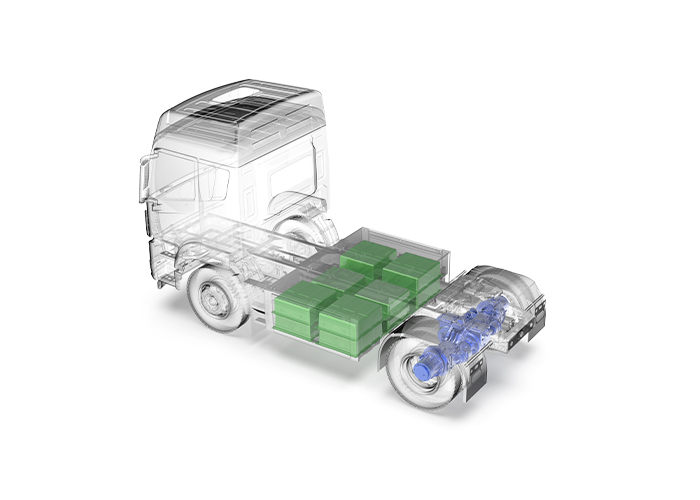
Durability tests can be meaningfully compared only if they are performed in the simulation of load cycles and operational regimes that will be seen by each commercial vehicle. A validated e-axle designed for long-range highway running encounters a different mixture of thermal loads, torque reversals, vibrations and repetitions than an axle that sees frequent stops in trash collection or on construction equipment. For OEM purchasing and engineering team members, the bottom line of a test report is not enough; the comparison begins with the duty cycle, proceeds through the test method and failure standard, and ends with evidence that the assembly tested is the one that will go into production.
1. Which Duty-Cycle Differences Matter Most Before Comparing Results?
Before you compare durability reports, you need to know what each e-axle was designed to withstand. Vehicle classification is not enough: two heavy trucks in the same vehicle category can behave quite differently, even if their gross vehicle weights are the same.
The best initial point to reference is a duty-cycle profile that links what the vehicle is doing with what it’s demanding mechanically and thermally.
Look beyond vehicle weight
For example, a long-haul tractor may have long durations at constant road speed with high demand events clustered around loaded starts, up-ramps and acceleration. A garbage truck may frequently cycle on and off, operate at low speeds and time at high load power demands to run auxiliary equipment. A mining or construction vehicle will frequently be subjected to high wheel loads on uneven terrain at low speeds and repeated torque demand.
These patterns give rise to a variety of durability issues. Repeated starts will add to the cycling of the drivetrain and generated heat. Long climbs may produce a long-term thermal load on the assembly. Rough surface can cause vibration and shock loading of the assembly and interfaces. A single max load value can’t cover all these issues.
Build a common operating profile
Request that all suppliers specify the vehicle mass and axle loads involved in testing, speed profile, torque demand, temperature, gradient, stop-start cycles, and number of hours of usage. Include payload variation, road surface, auxiliary loads, and regenerative braking events if necessary.
The point is not to make all applications undergo the same test. The point is to know what is and what is not the same. Comparison is only interesting once the variations are apparent.
2. How Can OEMs Compare Test Severity When the Procedures Differ?
Once you understand the duty cycles, the next problem becomes test severity. Two reports may each appear to be a durability test; they may each have a load, time, temperature limit, or operating sequence that is different. Similar names do not mean similar evidence.
Compare the actual test inputs
Are the torque and speed history, loads, number of hours, temperatures and any acceleration factors used to reduce the tests? Was the demonstration continuous operation, with peaks and valleys or many reversing demands or all of the above?
Accelerated testing can be effective, provided the assumptions are valid. Raising loads or temperature may make a test shorter, but it doesn‘t necessarily simulate the failure modes that would have occurred after many years of field operation. If a supplier adopts an accelerated approach, ask for the reason for acceleration and its limitations.
Separate component tests from system tests
A component bench test can define a specific failure mode, but it may not encompass all of the interactions experienced on a vehicle. Mount stiffness, suspension travel, cooling conditions, forces at the wheel end and control response can alter how loads are transferred to the assembly.
The good report defines the test boundary for procurement: what data was used, what was simulated and what was not tested. OEMs can then determine if the data has enough confidence to choose the component, needs further bench testing or vehicle validation.
3. Which Failure Indicators Should Be Compared Instead of Test Duration Alone?
Test hours and mileage accumulated can be equated but neither provides a complete answer. A longer test is not always more indicative, especially if its loading profile is less severe or the monitored failure criteria are incomplete.
The comparison should relate the exposure to the condition of the assembly observed.
Review the same failure criteria
Relevant indicators could be abnormal sound/vibration, bearing and gear condition, lubricant contamination or leakage, housing or mount damage, excess temperature, insulation and performance changes. Not all tests require all measurements, but conditions should be appropriate to the failure modes being examined.
Inquire about how a pass was defined, what was examined during the test, and what was assessed after the test was completed. If a report reads “no failure” with no definition for acceptance, there is too much subjectivity.
Look for trends, not just pass or fail
Even if the final result is a pass, a test unit is capable of producing evidence supporting further investigation. Factors that could justify continued testing include: temperature drift, increasing vibrations, wear debris or multiple control events.
If suppliers have cumulative-test data, find out what the variations were across the lots, and whether there were any deviations. A single prototype that meets the criteria can prove feasibility but cannot prove production consistency.
4. How Should OEMs Judge Whether Test Results Apply to Their Production Configuration?
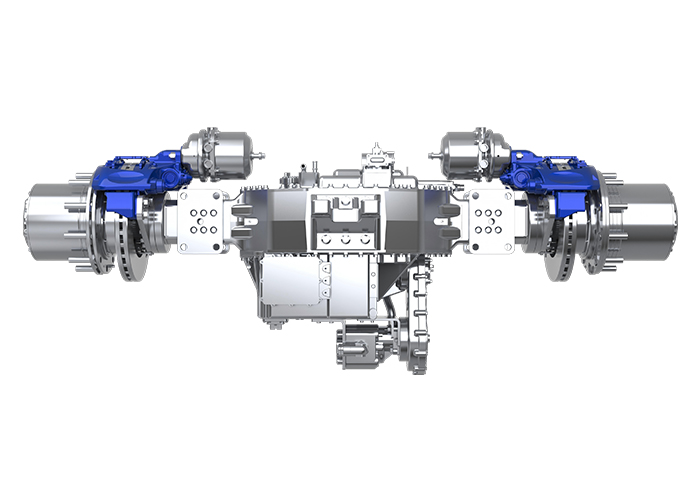
A quality test may be of limited use if the unit tested is not the same as the lead assembly in production. Configuration control is the basis for relating durability evidence from different suppliers.
The goal is to be able to relate each output to the actual hardware, software and operating environment that produced it.
Check the configuration against the quotation
Verify which tested combination of motor and gearbox with gear ratios, mounting interfaces, housing design, cooling provisions, lubrication specification, seals, bearings, and control software version is used. The specific items will be architecture-dependent, but the supplier should be able to determine which ones could impact durability.
One rating or mechanical configuration should not be assumed to support another. Another torque requirement, axle load, cooling configuration or install condition can change the stress distribution. Request the supplier provide the details of any variation and indicate if additional testing is necessary.
Establish how design changes are handled
Chronology for proof of durability Results may evolve Over time, material and component changes, in the same company or alternate suppliers, could render your old results invalid. OEMs should consider… How would you know if and when changes would require more testing? How does your approved configuration link to job records?
This does not mean that you have to have a full durability programme for every small change. It means that you make a record of the decision on the change, and base this on the potential impact rather than presuming it is safe.
5. What Evidence Should Be Required Before Approving an E-Axle for a Specific Duty Cycle?
An effective supplier comparison concludes with a well-documented evidence package rather than just a single durability score. OEMs require sufficient detail to recognize the limitations of the results provided and to spot any gaps that might impact the planned vehicle application.
Request a traceable test summary
Have the candidate define the duty-cycle, test setup, sample layout, load and speed profiles, test duration, environmental conditions, parameters monitored, acceptance criteria, results, and final disposition. Inspection documentation or failure analysis should be available if a point of failure was observed.
Also, it is important to separate the finished tests from work in progress and simulated results from physical testing. An open report highlights these differences rather than equating them to one another.
Close the gap with vehicle-level validation
Benchmark testing will not simulate all the features of the production vehicle. Before releasing production, the OEM should determine which operating conditions need to be validated on the vehicle or in a vehicle representative system environment. It should take into account route profile, payload, ambient condition, cooling system, control architecture, and projected service level.
The right approval decision is not necessarily the supplier with the longest test duration. It is the candidate whose evidence best fits the intended duty cycle, whose test limitations are understood, and whose remaining validation work is well defined and manageable.
Need Technical Support for Commercial Vehicle Drive-System Evaluation?
شركة هانغتشو المعاصرة لتكنولوجيا القيادة الإلكترونية المحدودة develops electric drive systems and related technologies for commercial vehicles, with work spanning R&D, engineering, testing, and manufacturing. For OEM teams assessing application suitability, the company’s القدرة التصنيعية provides context for understanding how product development connects with production.
Its R&D capability overview provides further information about the engineering and testing resources supporting electric-drive development.
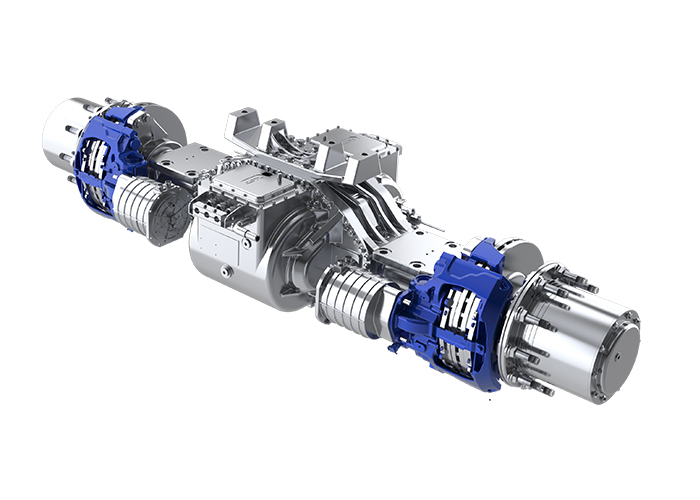
Its electric-drive portfolio includes configurations intended for different vehicle applications, such as the EA5000N heavy-truck e-axle. In evaluating a supplier, however, buyers should continue to ask for test records, configuration data, and validation materials applicable to a buyer’s particular duty cycle, instead of assuming all the listed product data demonstrate all operating environments.
خاتمة
Yet to compare e-axle durability data, simply stacking hours/miles or pass/fail statements isn’t enough. To help compare OEM processes, the first step is to compare the duty cycles, the severity and limit of each test, the failure criteria, and the match between test and production configurations. Any gaps can then be bridged in validation before a part is released. The result is that purchasing and engineering teams have something more concrete to differentiate between suppliers and avoid unsupported conclusions from headline figures, and that durability approval links to real-world vehicle use.
الأسئلة الشائعة
1. Can OEMs compare e-axle durability by test hours alone?
No. Test hours need to be interpreted alongside torque, speed, load cycles, temperature, and the test procedure. A shorter but more demanding test may provide different evidence from a longer test under relatively steady conditions.
2. Why does duty cycle affect e-axle durability?
Duty cycle controls the frequency and duration the assembly is subjected to various loads, speeds, temperatures, vibration and braking. These factors will be critical to identify which components and failure modes should be the primary focus during validation.
3. Is passing a bench test enough for production approval?
Not necessarily. The lab test can supply controlled proof but there may be interaction at the vehicle level that cannot be duplicated. OEMs should consider what the testers were unable to test and decide if further system or vehicle validation is necessary.
4. What should buyers request when suppliers use accelerated durability tests?
Request the applied test profile, acceleration justification, acceptance criteria and known limitations. The purchaser should know if the accelerated test procedure is representative of the application environment and if the accelerated procedure will not miss failure mechanisms that occur during other application modes.
5. When should an e-axle be retested after a design change?
Retesting depends on the nature and potential impact of the change. Changes to load-bearing parts, materials, cooling, lubrication, controls, or manufacturing processes may affect durability. The supplier should document the assessment and justify the validation needed.