
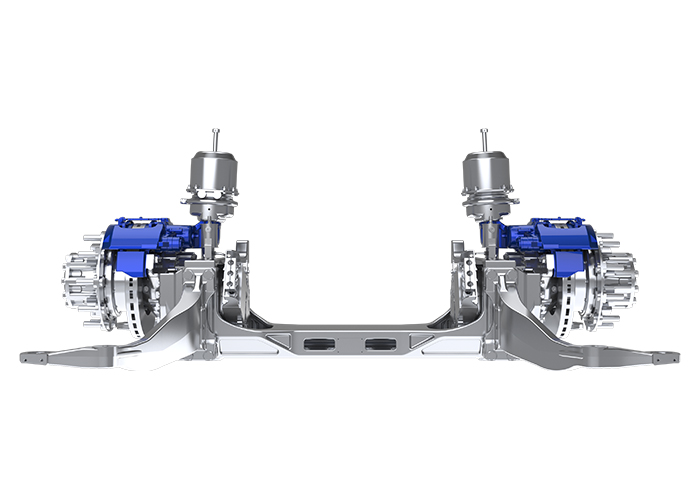
A low-floor portal axle is worth considering when an electric bus program needs more usable passenger space without allowing the drivetrain to dictate the interior layout. The difficult part is that floor height, aisle width, axle load, tire size, suspension movement, brakes, service access, and propulsion packaging all compete for the same limited space around the rear axle. A layout that appears efficient in an early CAD section can become much less attractive once wheel housings, structural members, wiring, cooling lines, and production tolerances are added. For OEM engineers and technical buyers, the decision should therefore start with the finished bus package rather than the axle alone.
Why Does Axle Architecture Matter So Much in a Low-Floor Bus?
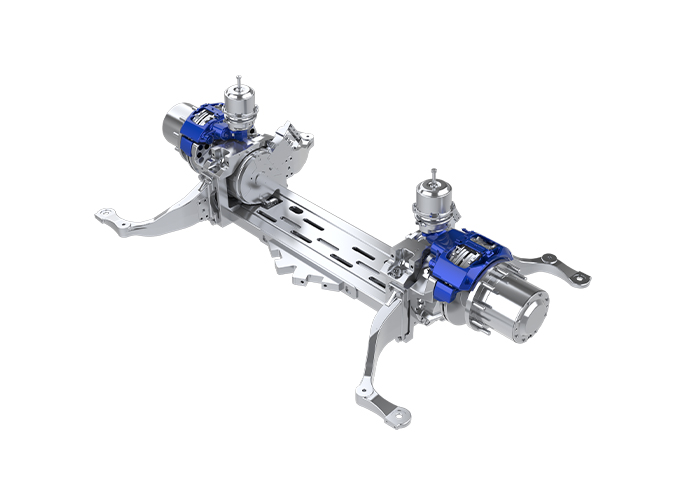
In a conventional drivetrain layout, central drive components can occupy the space directly beneath the passenger compartment. That often forces the body designer to work around raised sections, narrower passages, or changes in floor height. A portal-style or wheel-side arrangement changes where the drive components sit, which can release more space through the center of the vehicle.
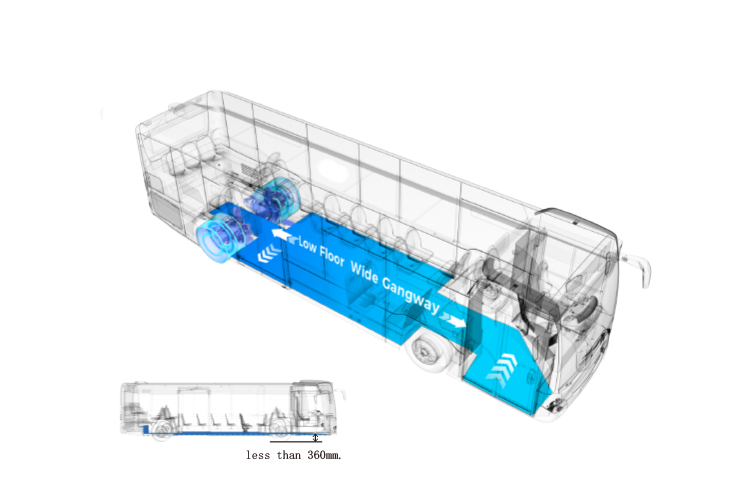
The practical benefit is not simply “a lower floor.” What matters to a bus OEM is whether the complete installation produces a wider and more continuous usable area after the axle, suspension, brakes, wheels, and body structure are all in place. The bus application layout is therefore more useful as an engineering reference when it is reviewed together with the intended passenger compartment rather than separately from it.
Look at the Passenger Envelope, Not One Floor-Height Figure
A single floor-height dimension can hide several packaging problems. Wheel housings may still narrow the aisle, a structural cross-member may interrupt the standing area, or service access may require space that was not included in the initial body drawing. For an urban bus, these details influence passenger movement every day.
During concept review, engineers should compare clear aisle width, standing width around the axle, floor transitions, seat mounting zones, door-to-aisle movement, and service clearances. These measurements say far more about the usefulness of a low-floor axle than a general claim about accessibility.
Which Vehicle Dimensions Need to Be Fixed Before Supplier Comparison?
Low-floor projects become expensive when several major interfaces remain open at the same time. If tire size changes after axle packaging has begun, for example, the wheel-end envelope can move. A later change in suspension geometry may then affect the floor, while a change in axle load can influence structural requirements. By that stage, the issue is no longer confined to the axle drawing.
Before suppliers are asked to confirm a package, the vehicle team should have a reasonably stable set of boundaries. These usually include rated axle load, track width, tire and rim size, suspension arrangement, brake configuration, electrical architecture, and the target passenger-space envelope.
| Vehicle Input | Procurement Relevance |
| Rated axle load | Defines structural and wheel-end demand |
| Track width | Influences chassis and interior packaging |
| Tire and rim size | Changes wheel-end space and floor geometry |
| Suspension layout | Sets movement and mounting clearances |
| Brake configuration | Affects available wheel-end packaging |
| Target aisle/floor envelope | Defines the space the axle must preserve |
The table is useful only if the values are treated as project constraints rather than approximate references. Once those boundaries are stable, a bus drive-system category can be reviewed against a real installation envelope instead of being compared by general specifications.
How Should OEMs Judge Passenger-Space Gains Against Drivetrain Requirements?
A wider aisle is valuable, but it cannot be the only reason to approve an axle architecture. The same wheel-end area still has to carry the required load, transmit drive torque, accommodate braking hardware, and leave enough room for suspension travel and maintenance.
That is where two apparently similar proposals can differ. One may free slightly more interior width but require a difficult body modification; another may fit more easily and leave better service access. The correct choice depends on which constraint is most difficult on the vehicle being developed.
Make the Space Claim Measurable
Purchasing teams should ask suppliers to express packaging benefits in dimensions that can be checked in the vehicle model. Clear aisle width, minimum wheel-house clearance, service access, mounting envelope, and suspension movement are more useful than phrases such as “high passenger capacity.”
A compact installation also needs to survive normal variation. Tire deflection, suspension movement, wiring bends, assembly tolerances, and floor structures all reduce the nominal gap shown in CAD. A design with only a small theoretical clearance may require repeated adjustments during pilot production.
For this reason, the comparison should connect three questions: how much usable passenger space is created, whether the axle still meets the vehicle’s mechanical requirements, and how difficult the package will be to manufacture consistently.
What Should Be Validated Before the Low-Floor Package Is Frozen?
A static packaging review answers only part of the question. Once a bus carries passengers and moves through normal suspension travel, the relationships between axle, tire, body, and floor change. Components that appear well separated at nominal ride height can move much closer together during loaded operation.
Vehicle validation should therefore include both drivetrain behavior and physical clearance around the axle. Full-load ride height, suspension compression, wheel and tire tolerances, surrounding harnesses, hoses, brake components, and access to service points all deserve inspection before the body package is released.
Test the Interfaces That Are Hard to Change Later
Some problems are inexpensive to correct in the concept phase and costly after tooling has started. A connector that cannot be reached, a floor panel that interferes with service access, or a wheel-house structure that needs reshaping can delay an otherwise mature vehicle program.
The drivetrain team and body team should therefore review the same vehicle package at defined development milestones. When the axle, suspension, or body structure changes, the passenger-space model should be checked again rather than relying on an earlier clearance study.
What Should Buyers Confirm Before Nominating a Portal Axle Supplier?
Tight packaging gives little room for unclear engineering responsibility. Before a supplier is approved, the OEM should know which dimensions are controlled, which interfaces can change, how drawing revisions are handled, and what triggers revalidation.
Prototype success is not enough. A production axle must repeatedly fit the same body and suspension package, which makes dimensional control, end-of-line inspection, traceability, and engineering-change management relevant to the purchasing decision.
Production Consistency Becomes Part of Packaging Quality
A small dimensional shift at a mounting point may not affect a loose chassis package, but it can matter in a low-floor bus where several clearances are already tight. Supplier review should therefore include control of critical dimensions, assembly consistency, test records, and the process used to communicate technical changes.
The OEM should also confirm what happens if tire size, track width, brakes, suspension, or adjacent body structures change during vehicle development. Those changes may look minor on a program schedule, yet they can alter the packaging result that justified the axle choice in the first place.
The supplier’s manufacturing capability is therefore worth checking before final nomination, not only after the prototype vehicle has been approved.
Professional Technical Support from Hangzhou Contemporary e-Drive Technology Co.,Ltd.
항저우 현대 e-드라이브 기술 유한회사 develops distributed electric drive systems for new energy commercial vehicles and supports bus programs that require close coordination between axle packaging and vehicle layout. Its bus-related portfolio includes the EA1400KB low-floor electric portal axle and the EA2100P low-floor portal axle. Project discussions can be based on axle load, track width, tire and rim specification, suspension layout, braking interfaces, electrical architecture, floor targets, and installation constraints. This allows the axle package to be reviewed against the actual vehicle envelope while development, validation, and manufacturing requirements are being finalized.
결론
A low-floor portal axle earns its place in a bus program only when the packaging benefit survives the complete vehicle design. OEM teams should verify usable aisle space, axle load, wheel-end interfaces, suspension movement, service access, and production tolerances before freezing the package. The most useful supplier review is therefore built around actual vehicle drawings and controlled dimensions, not general low-floor claims. Before nomination, both sides should agree on the critical interfaces, validation responsibility, and changes that would require the package to be checked again.
자주 묻는 질문
1. What information should an OEM provide when requesting a low-floor portal axle proposal?
The supplier normally needs axle load, track width, tire and rim specifications, suspension arrangement, brake configuration, electrical architecture, installation envelope, and the required floor or aisle geometry to judge whether the axle fits the actual bus platform.
2. Is a wider aisle always the best indicator of a better low-floor axle?
No. Aisle width should be reviewed with wheel-house intrusion, suspension travel, service access, axle load, brake packaging, and production clearance. A wider nominal aisle has limited value if the finished installation creates difficult interfaces elsewhere.
3. Why should suspension travel be checked during axle packaging?
The axle, wheels, hoses, wiring, and surrounding structures change position as the suspension moves. A clearance that looks acceptable at static ride height may become insufficient under full load or suspension compression.
4. What should purchasing teams ask about production control?
They should confirm critical-dimension inspection, drawing revision control, traceability, end-of-line testing, and the process for communicating design changes that could affect track width, mounting points, brakes, wheel-end packaging, or vehicle clearance.
5. When should the low-floor axle package be frozen?
It should be frozen after major interfaces such as axle load, tire size, track width, suspension, brakes, electrical connections, and the passenger-space target are stable enough to complete vehicle-level clearance and validation checks.