
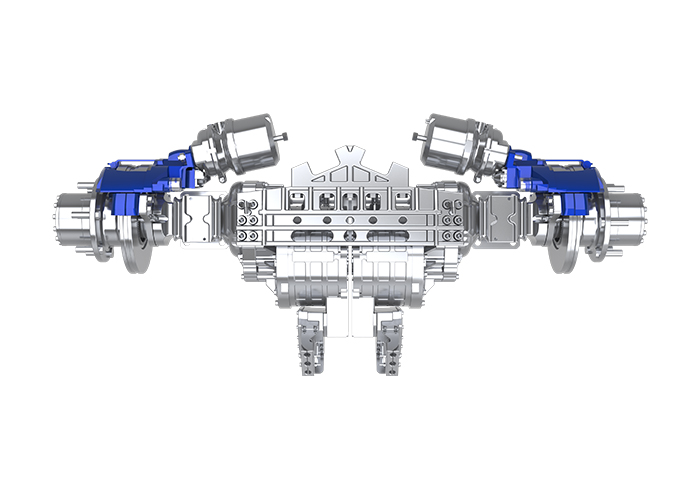
Regenerative braking and EMB are both relevant to heavy-duty electric vehicle braking, but they perform different functions. Regenerative braking comes from the electric drivetrain and uses the traction motor to provide deceleration while recovering part of the vehicle’s kinetic energy. EMB, or Electro-Mechanical Brake, belongs to the service-braking system and uses electrical commands together with an electromechanical actuator to generate friction braking force. For OEMs, the engineering task is not to choose one instead of the other, but to define their roles clearly and coordinate them within the vehicle’s braking architecture.
Why Is EMB Different From Traditional Pneumatic Braking and EBS?
Heavy-duty braking systems have gradually moved from pneumatic transmission toward more electronic control. A traditional pneumatic brake relies on air pressure and pneumatic components to transmit and execute the braking request. EBS introduces electronic control, but pneumatic actuation remains part of the system. EMB goes further by transmitting the braking command electrically and using an electric motor to drive the mechanical braking mechanism at the wheel end.
This changes more than the actuator itself. Electrical command transmission affects system layout, interfaces, diagnostics, fault handling, installation, and vehicle-level control. It is also one reason EMB is closely connected with the development of brake-by-wire chassis technology.
How EMB Changes the Braking Architecture
In an EMB system, the braking request is converted into an electrical signal, processed by the control system, and sent to the wheel-end actuator. The actuator motor then drives the mechanical braking mechanism to create friction braking force. The braking force is still mechanical; what changes is the transmission and execution path.
This distinction is important because EMB should not be confused with regenerative braking. EMB is a service-braking technology, while regenerative braking is a drivetrain function. Treating them as separate systems first makes later integration much easier to understand.
How Do Regenerative Braking and EMB Work Together?
Regenerative braking operates through the traction motor. During suitable deceleration, the motor can provide negative torque and convert part of the vehicle’s kinetic energy into electrical energy. EMB provides the mechanical braking force needed by the service-braking system.
The two systems can therefore contribute to the same deceleration event without performing the same job. Regeneration handles energy recovery when operating conditions allow it, while mechanical braking remains responsible for meeting the required braking demand.
Different Functions, Coordinated at Vehicle Level
The practical value comes from coordination rather than substitution. During normal deceleration, the electric drivetrain may provide part of the braking force, while mechanical braking supplies the remainder. If the regenerative contribution changes, the vehicle still needs sufficient mechanical braking capability to satisfy the braking requirement.
For OEMs, this means the braking strategy should begin with vehicle deceleration and safety requirements. Energy recovery can then be optimized within those limits. A city bus, long-haul tractor, and sanitation vehicle may use different calibration strategies because their loads, routes, speeds, and braking frequencies differ.
What Should OEMs Define Before Integrating EMB?
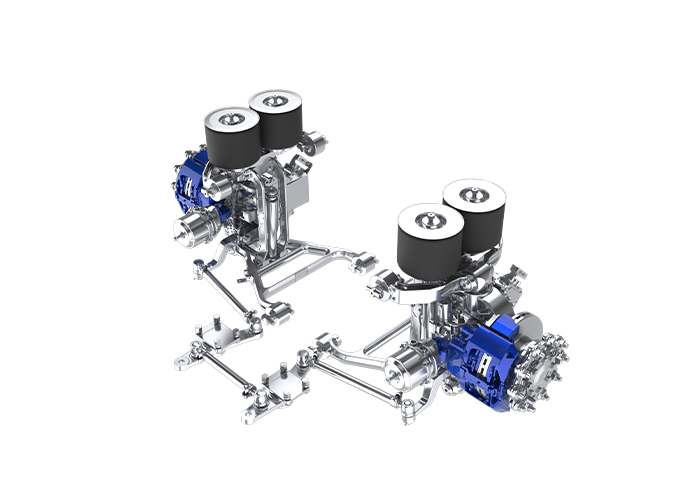
EMB selection should be based on system-level requirements, rather than a target braking torque value. For commercial vehicles, there are numerous variations in gross vehicle weights, axle loads, wheel configurations, duty cycles, installation envelopes and electrical architectures. All these factors must be taken into account when determining suitability for a given application
Before requesting a technical proposal, OEM design teams should provide basic information on vehicle class, GVW, axle loads, wheels and tires, axle configurations, power supply, communications, installation envelope and operating environment.
Vehicle Inputs That Affect System Matching
The braking requirement should also be divided clearly between normal service braking, emergency braking, parking functions, and any planned coordination with the electric drivetrain. This gives the supplier enough information to evaluate the system in the context of the actual vehicle instead of comparing components only by catalogue specifications.
OEM teams developing a new braking architecture can also review the broader commercial vehicle brake-system category when considering suitable system configurations.
What Should Be Verified During Vehicle Testing?
A heavy-duty braking system should be validated under representative operating conditions rather than only during one controlled stop. Vehicle mass, repeated braking, road adhesion, thermal conditions, communication faults, and system integration can all influence performance during real operation.
A practical validation plan can focus on the following areas:
| Validation Area | OEM Focus |
| Command response | Braking requests are transmitted and executed correctly |
| Heavy-load braking | Required braking capability is maintained under vehicle load |
| Repeated braking | Thermal behavior remains within defined operating limits |
| Low-adhesion conditions | Braking remains controllable as tire grip changes |
| Fault response | System behavior is defined when faults occur |
| Vehicle integration | Braking functions operate correctly within the vehicle architecture |
Pay Attention to the Transition Between Braking Sources
If regenerative braking contributes to vehicle deceleration, OEM engineers should also observe what happens when that contribution changes. Total deceleration should remain predictable, and the mechanical braking system must continue to satisfy the required braking performance.
The purpose of this testing is not to maximize regenerative braking under every condition. It is to confirm that energy recovery can be used without weakening the vehicle’s braking requirements.
What Should Buyers Ask an EMB Supplier?
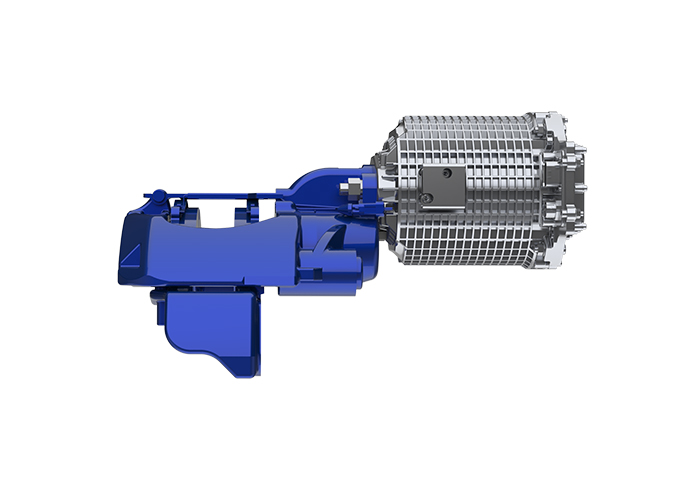
Supplier evaluation should cover more than braking force. A brake-by-wire project involves mechanical hardware, electrical systems, communication interfaces, diagnostics, validation, and production control, so purchasing and engineering teams need to understand how the supplier supports the complete development process.
Key technical questions include how braking commands are transmitted, what electrical architecture is required, which communication interfaces are supported, how actuator status is monitored, and how faults are reported. Buyers should also clarify what validation support is available and how changes are controlled when the project moves from prototype development into series production.
From Prototype to Production
A successful prototype does not automatically guarantee production consistency. OEMs should therefore review assembly control, component traceability, end-of-line testing, change management, and technical support during vehicle validation.
This is especially important for brake-by-wire systems because mechanical, electrical, and control functions need to remain consistent across production vehicles. Supplier capability should therefore be judged at both engineering and manufacturing levels.
How Can the Right Engineering Partner Support Brake-by-Wire Development?
Once an OEM moves from selecting an actuator to defining a complete brake-by-wire architecture, experience across braking, electric drive, and chassis integration becomes more valuable. 항저우 현대 e-드라이브 기술 유한회사 works on distributed electric drive, electromechanical braking, and new energy commercial vehicle system integration. OEM teams evaluating a wheel-end braking solution can discuss the EB24 Electromechanical Brake against actual vehicle inputs such as gross vehicle weight, axle load, electrical architecture, duty cycle, installation constraints, communication interfaces, and validation requirements instead of selecting a component from specifications alone.
결론
EMB and regenerative braking address different aspects of a vehicle. Regenerative braking is a function of the drive train, while EMB is an electrically commanded mechanical friction brake. OEMs should identify their vehicle requirements, operating conditions, interfaces, and performance assessments, and then consider the integration and coordination of regenerative braking. By keeping the two functions distinct, you also keep the design, validation, and verification processes simple.
자주 묻는 질문
1. Is EMB the same as regenerative braking?
No. EMB generates mechanical friction braking through an electromechanical actuator, while regenerative braking uses the traction motor to provide deceleration and recover energy.
2. How is EMB different from EBS?
EBS introduces electronic control while retaining pneumatic actuation. EMB further replaces the pneumatic execution path with electromechanical wheel-end actuation.
3. Can regenerative braking replace mechanical service braking?
No. Regenerative braking depends on drivetrain operating conditions, so heavy-duty vehicles still require mechanical braking capable of meeting the defined braking requirement.
4. What information should OEMs prepare before selecting EMB?
Vehicle weight, axle loads, wheel specifications, duty cycle, electrical architecture, installation space, communication interfaces, and braking requirements should be defined first.
5. What should buyers verify before approving an EMB supplier?
Buyers should review system matching, electrical interfaces, validation support, fault response, production consistency, traceability, change control, and technical support.